
Press Contact
SISU News Center, Office of Communications and Public Affairs
Tel : +86 (21) 3537 2378
Email : news@shisu.edu.cn
Address :550 Dalian Road (W), Shanghai 200083, China
Further Reading
INFOGRAPHIC | How do SISU students respond to MBTI?
14 June 2024 | By Xue Shengwen, Wu Yan | SISU
|
M |
ost students of Shanghai International Studies University (SISU) hold different attitudes towards Myers–Briggs Type Indicator (MBTI) which is popular among students.
MBTI is a popular psychometric tool used to assess personality preferences based on Carl Jung's theory of psychological types. It categorizes individuals into 16 personality types. Each type is characterized by four dichotomous preferences: Extraversion (E) or Introversion (I), Sensing (S) or Intuition (N), Thinking (T) or Feeling (F), and Judging (J) or Perceiving (P).
These preferences form a unique personality profile, providing insights into how individuals perceive the world, make decisions, and interact with others.
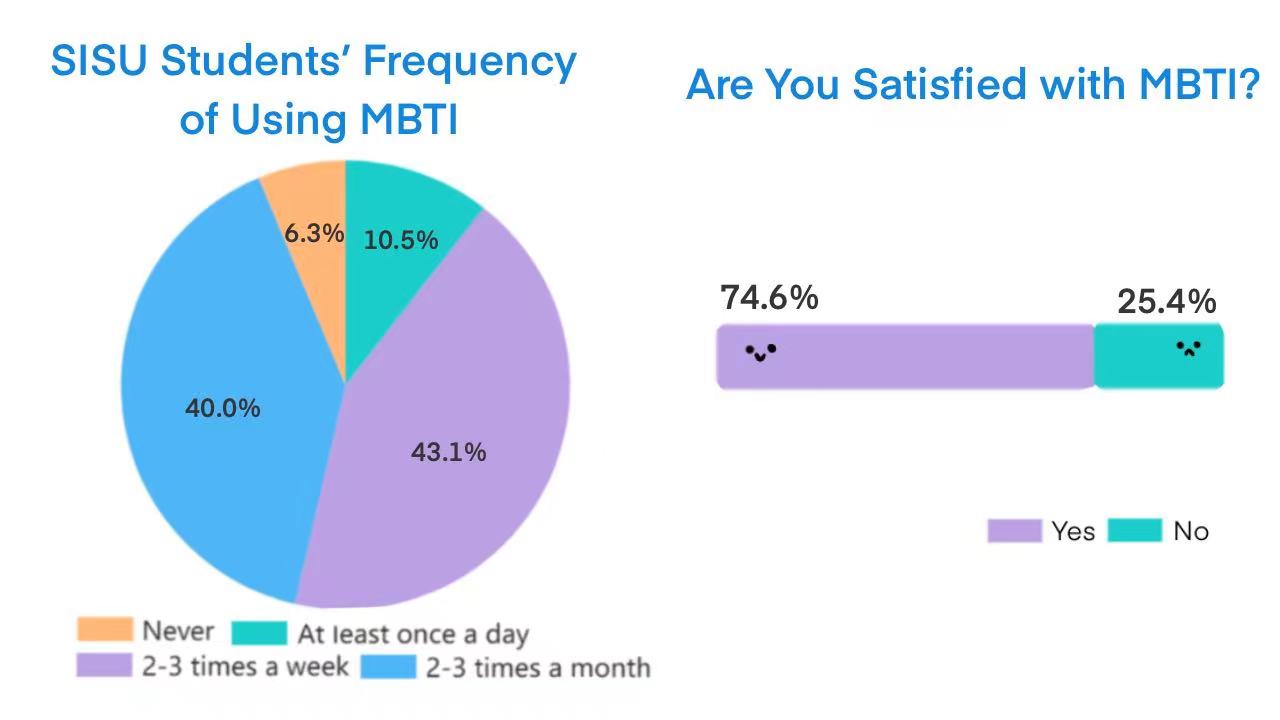
According to our survey, 74.6% of SISU students have a positive attitude towards MBTI. They often use MBTI as a tool for exploring their own personalities and interpersonal interactions. Others dislike MBTI because they feel it oversimplifies human traits by categorizing them into two extremes. They also encounter many instances of MBTI being used improperly in their surroundings.
“Once I encountered someone with severe procrastination during a group assignment. He attributed his lack of responsibility and failure to complete tasks to that his MBTI type is P,” said Jin Zilong, a third-year student from SISU’s School of Japanese Studies who holds a negative attitude towards MBTI.
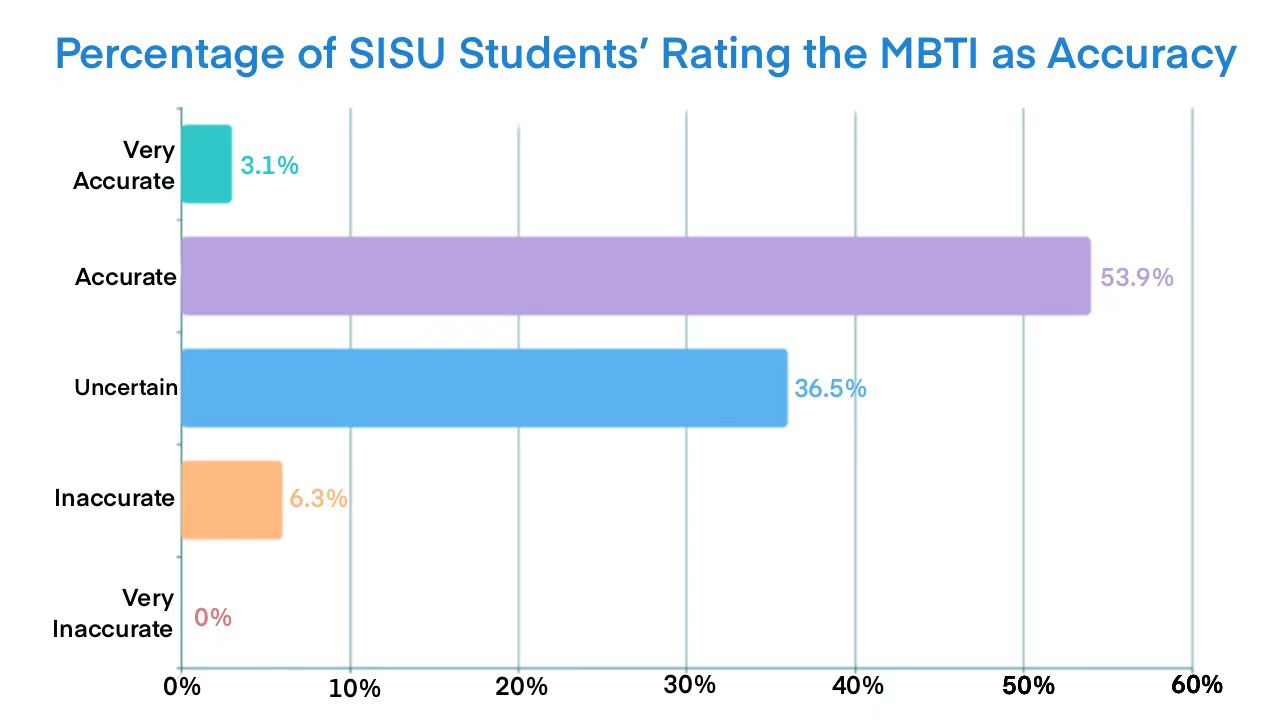
Using MBTI seems to have become a trend. Our survey finds that despite some people acknowledging the inaccuracy of MBTI, they still use it as a standard because everyone around them is using it.
“Almost every day, there are trending topics related to MBTI on social media. My friends love it and I have to adapt to using it in my daily life." Zhang Wanru, a third-year student from SISU’s School of Journalism and Communication said.
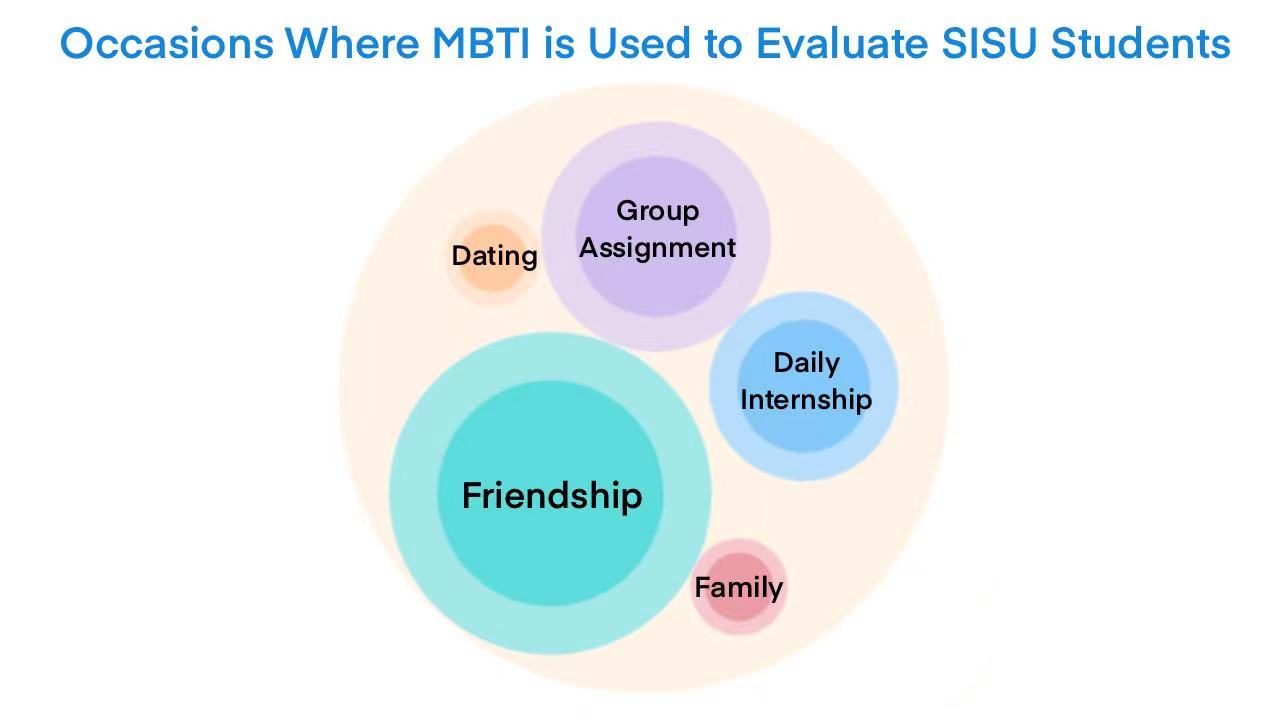
Most of the SISU students have been assessed by others using MBTI. Friendship, group assignments, and work are the most common scenarios where it is used. Jin recalled his interview experience at an advertising agency, “I was asked about my MBTI type but I didn’t take that test. It’s ridiculous that the interviewer tried to guess my MBTI type simply through my resume and the 20-minute talk.”
Some students regard MBTI as an effective instrument in work arrangement. “I love to let my J-type friends make our schedules and things that need to be thought carefully before taking action. Like I’m an E, stands for extroversion. I always take the tasks of communicating with others,” said Li Mingyang, a second-year student of SISU’s School of Education.
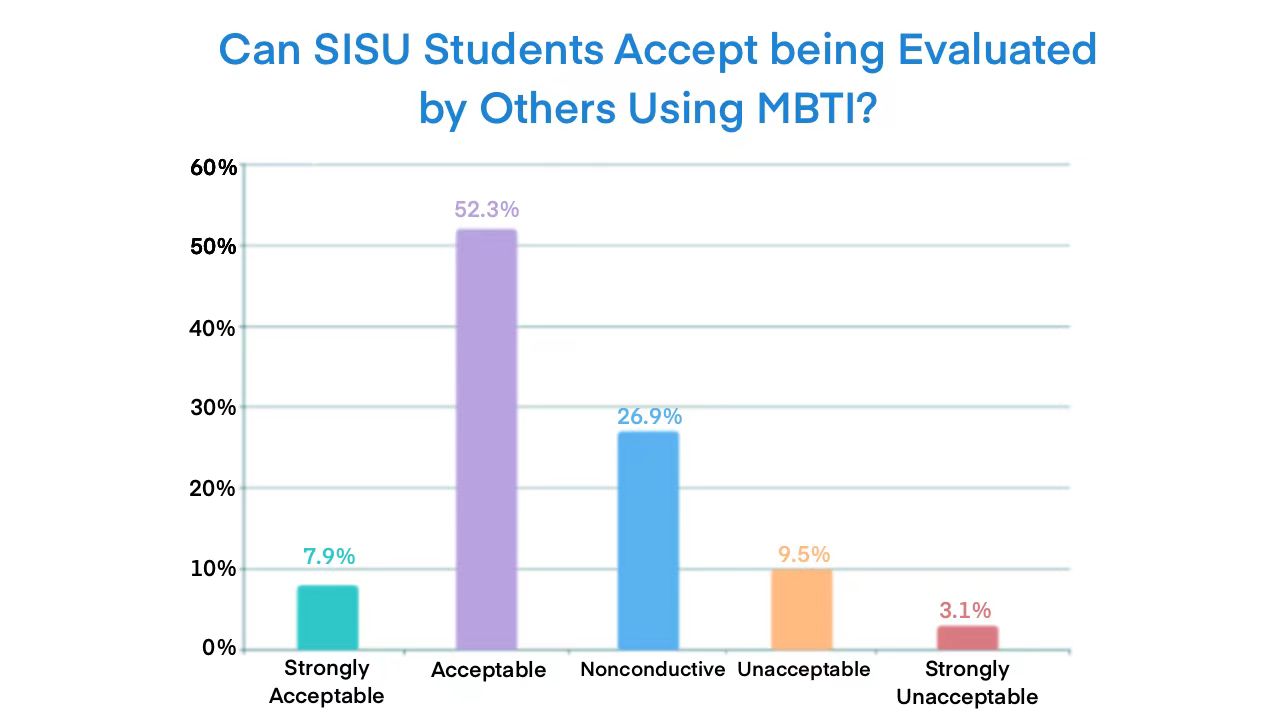
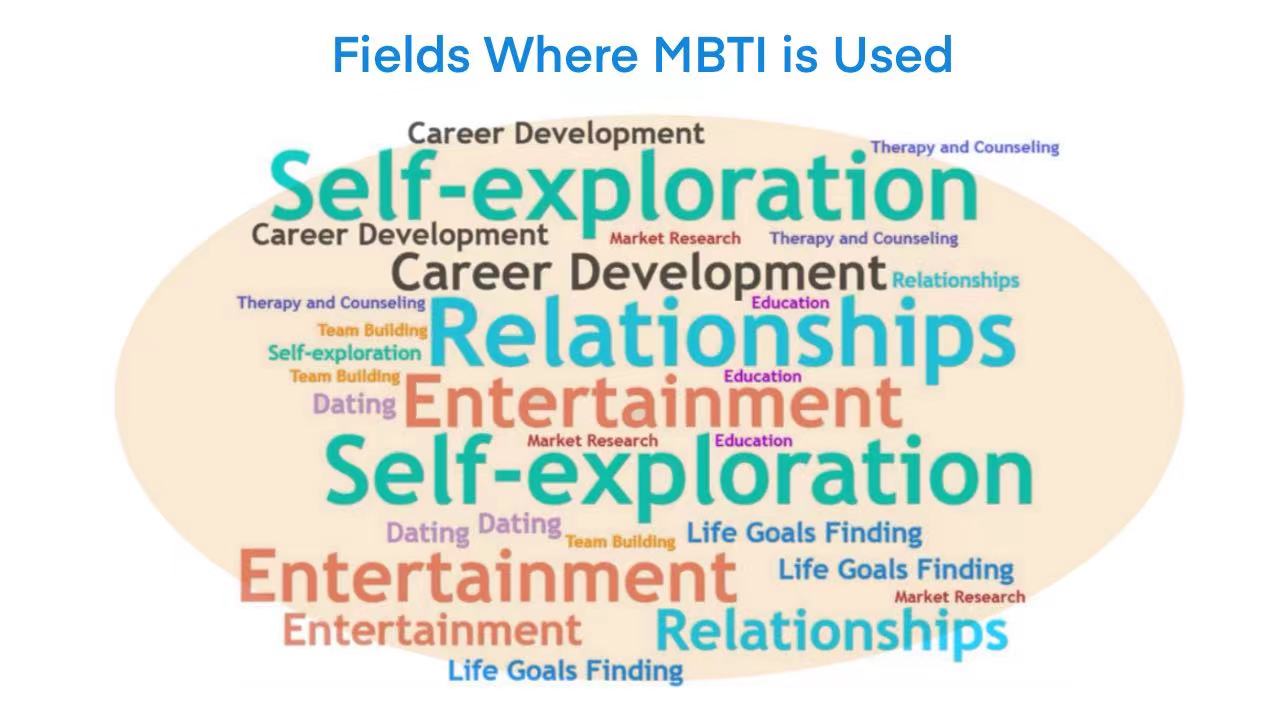
As a measurement tool, MBTI also updates its question database in real-time to adjust to current situations. In addition to the basic letters, experts also recommend using Jung's eight cognitive functions analysis to help everyone get a more comprehensive understanding of personality.
For instance, someone with an MBTI type of ISTJ primarily can use Introverted Sensing (Si) and Extraverted Thinking (Te) from Jung’s theory for another reference. This can provide a deeper understanding of how ISTJs perceive and judge information. However, using letter combinations as a fixed label for a person still has its limitations.
“I think it’s correctly used if it’s just for fun, not for judging a person with stereotypes,” Jin said, “Simply define someone with four letters is far from enough. It may be a standard but not an absolute one.”
Li said that caring someone with his or her MBTI type is correct such as understanding that some of Is suffer from talking to strangers. But using MBTI as a stereotype or for ranking others is totally wrong.
Press Contact
SISU News Center, Office of Communications and Public Affairs
Tel : +86 (21) 3537 2378
Email : news@shisu.edu.cn
Address :550 Dalian Road (W), Shanghai 200083, China
