
The monitor showing samples submitted and amplifier status
Photos provided by Songjiang District Central Hospital
SISU News Center, Office of Communications and Public Affairs
Tel : +86 (21) 3537 2378
Email : news@shisu.edu.cn
Address :550 Dalian Road (W), Shanghai 200083, China
05 June 2021 | By Huang Siyi, Wang Mei | Songjiang News
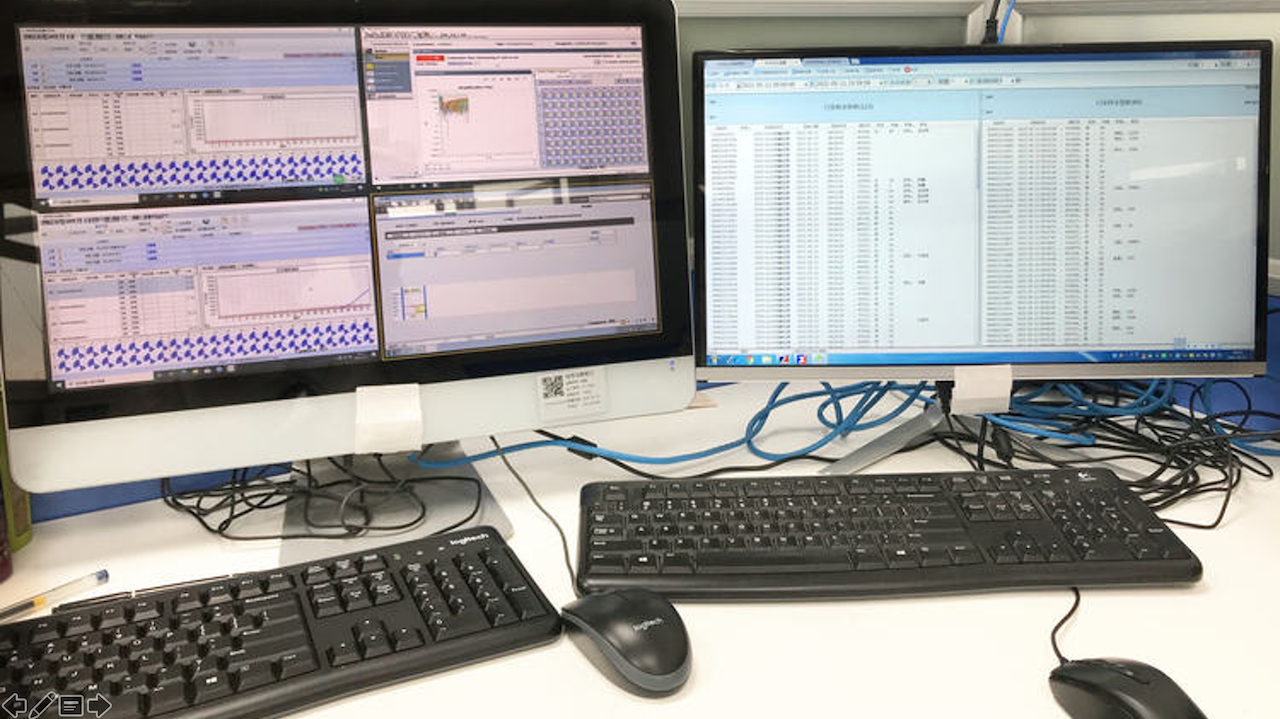
The monitor showing samples submitted and amplifier status
Photos provided by Songjiang District Central Hospital
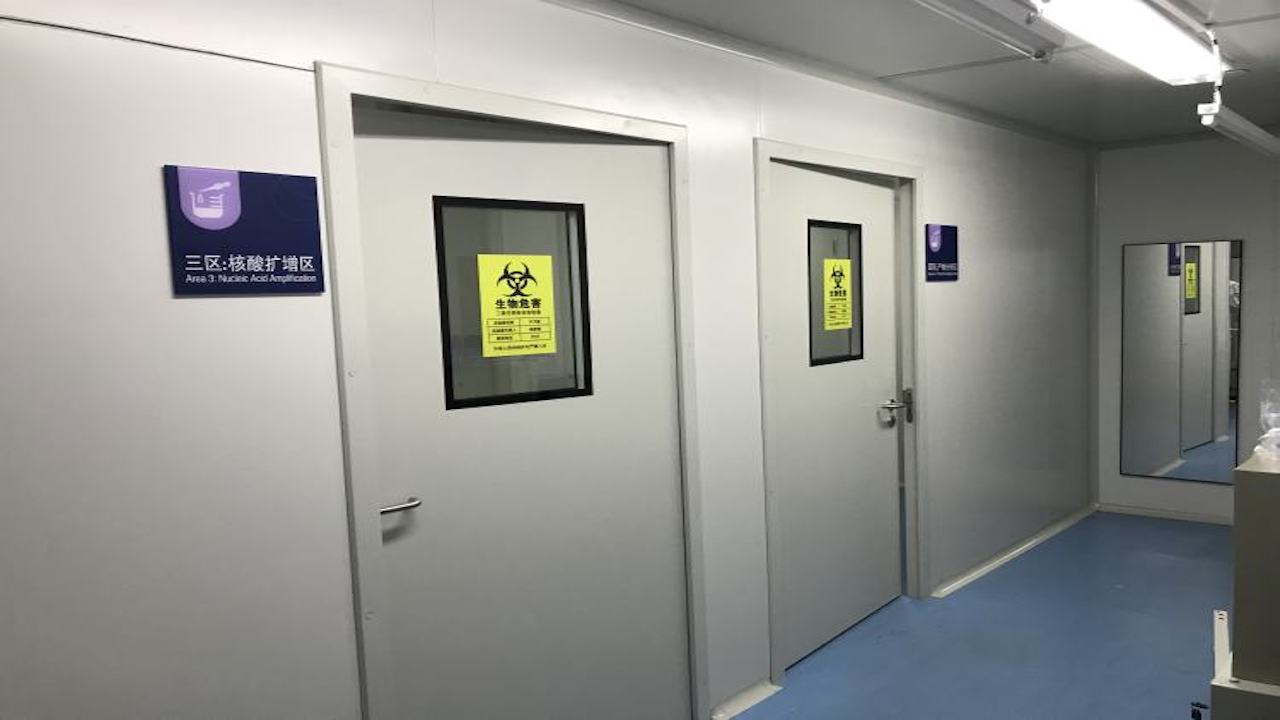
Nucleic acid amplification and analysis area
Photos provided by Songjiang District Central Hospital
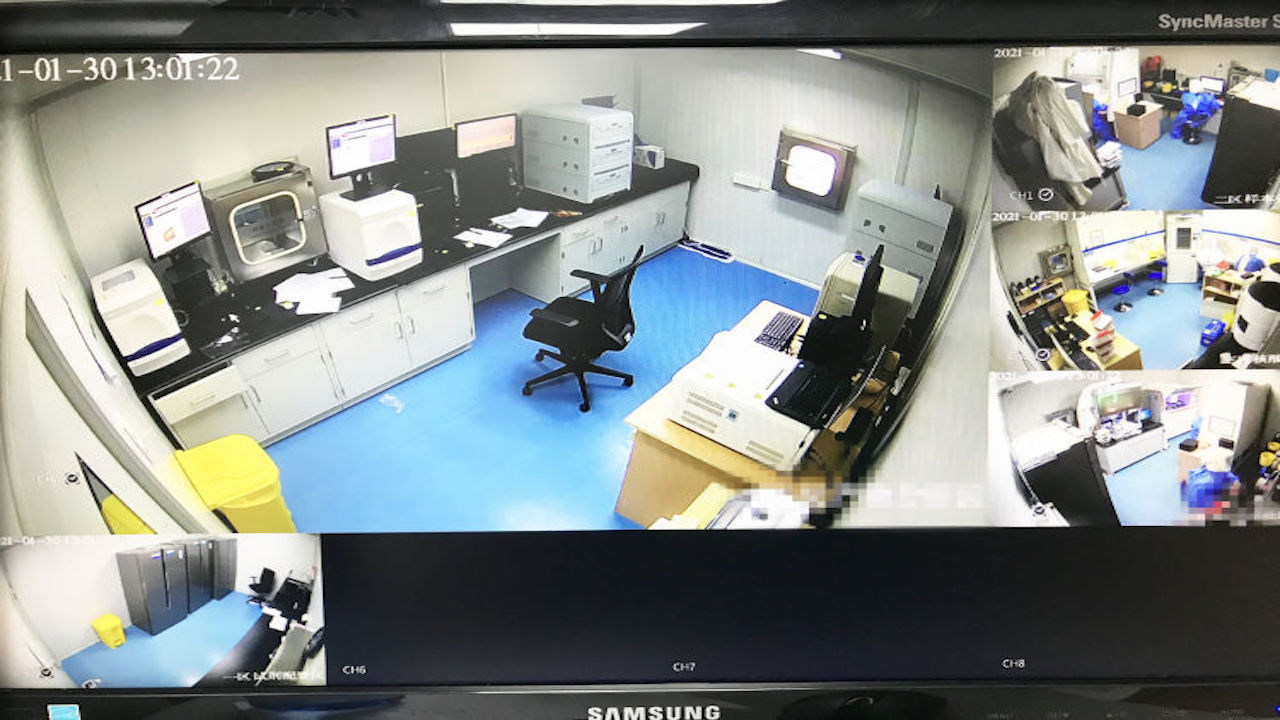
Nucleic acid amplification and analysis area
Photos provided by Songjiang District Central Hospital
|
W |
ith a data cable, a converter and a screen recording device, Songjiang District Central Hospital paid less than 1000 yuan to give its lab technicians quick access to Covid-19 test results, getting a resounding thumbs up from other hospitals.
The hospital, which is the medical testing center for Songjiang, has four PCR amplifiers in its PCR laboratory specialized in Covid-19 testing. Depending on the test method, processing time for each batch of samples ranges from 51 to 110 minutes. Technicians usually leave the lab when amplification starts and come back when they expect it to be finished.
However, the technicians have to wear protective clothing and follow strict disinfection procedures every time they enter and leave the lab. “The technicians can’t predict processing time exactly. If they come back too early, they waste time or disposable protective equipment, and if they come late, reports are delayed,” said Hou Yanqiang, the testing center director.
Because of information security concerns, only qualified technicians are authorized to analyze the amplification results. What’s more, to cope with the network load of these standalone computers, they have to do the analyses in the lab, according to Cao Hui, who is responsible for testing.
“If there is something abnormal about the amplification results which junior technicians can’t figure out, all they can do is send photos to their superiors or ask them to come down to the lab,” Hou said.
The system clearly wasn’t flexible enough. To remedy this, the testing center and their IT colleagues brainstormed possible solutions in early May and came up with a better way of working.
They added inexpensive data cables, converters and screen recording devices so that the content of four or more PCR amplifiers can be displayed simultaneously on any other computer. This allows technicians and administrators to check the processing status more quickly and also helps standardize operations. “The accelerated review of test reports benefits patients,” Hou said.
The next step is to install devices with 12 or more channels to connect all the amplifiers in the lab. Hou said that when they have road-tested this further improvement, the measure can be extended to all nucleic acid testing labs in Songjiang, Shanghai and even the whole country.
SISU News Center, Office of Communications and Public Affairs
Tel : +86 (21) 3537 2378
Email : news@shisu.edu.cn
Address :550 Dalian Road (W), Shanghai 200083, China

HONGKOU CAMPUS
550 Dalian Road (W), Shanghai 200083, China
SONGJIANG CAMPUS
1550 Wenxiang Road, Shanghai 201620, China
© Shanghai International Studies University | SISU | 上海外国语大学