
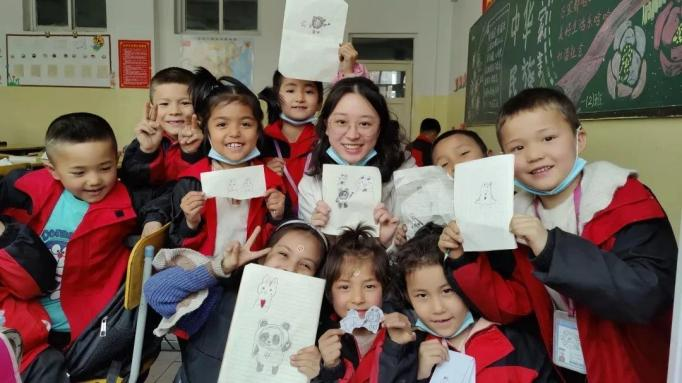
Wang Yuqin and Primary School Students at Shache County
Press Contact
SISU News Center, Office of Communications and Public Affairs
Tel : +86 (21) 3537 2378
Email : news@shisu.edu.cn
Address :550 Dalian Road (W), Shanghai 200083, China
Further Reading
Wang Yuqin: Bridging Different Culture, Reaching a Wider World
14 March 2024 | By SISU/SES translators/Xu Jing | SISU
-
-
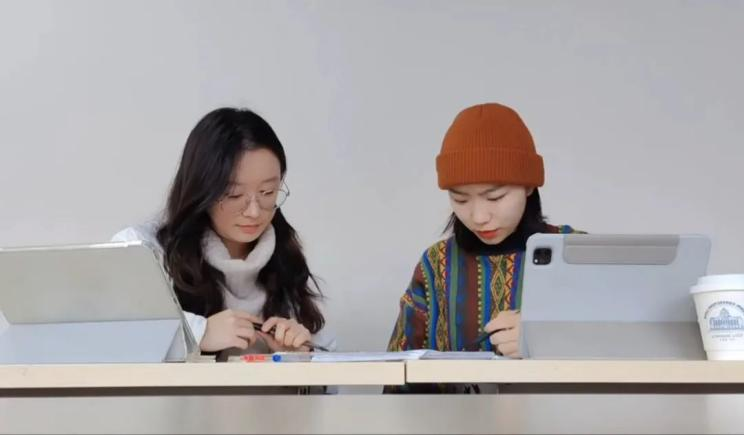
Wang practices with her classmates after class
-
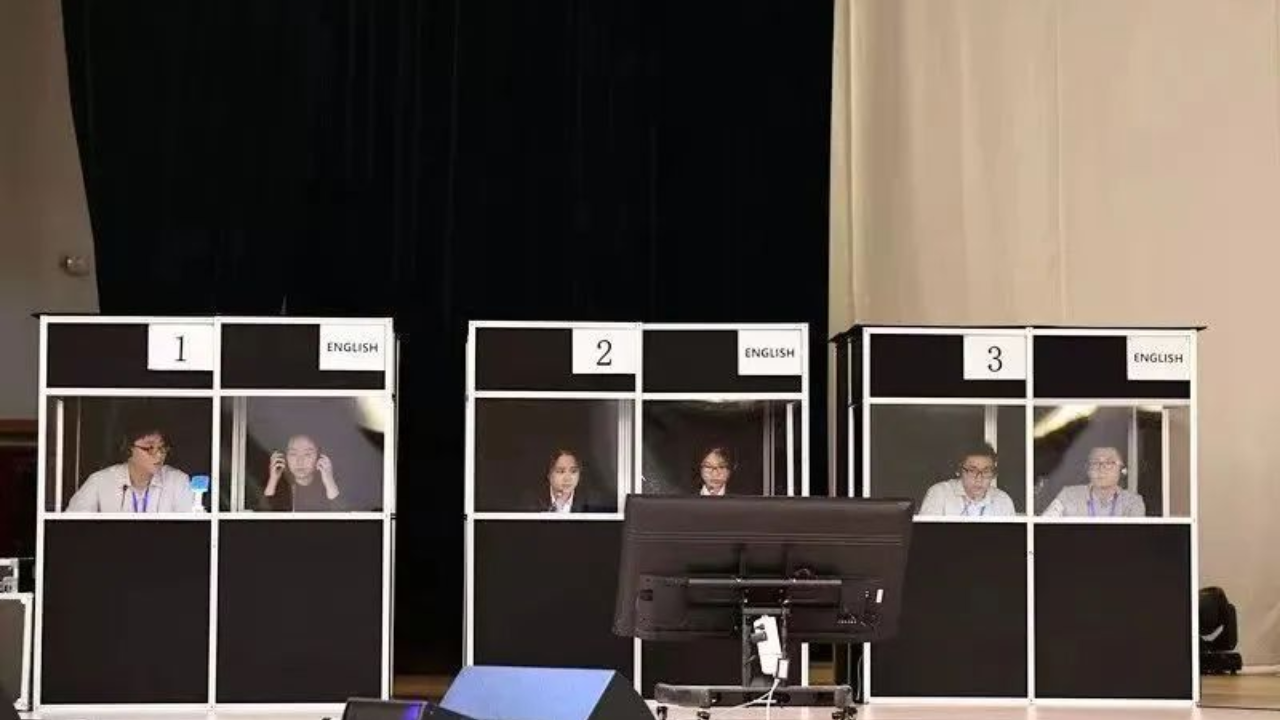
The Competition Site of the First Multilingual Relay Interpreting Contest
-
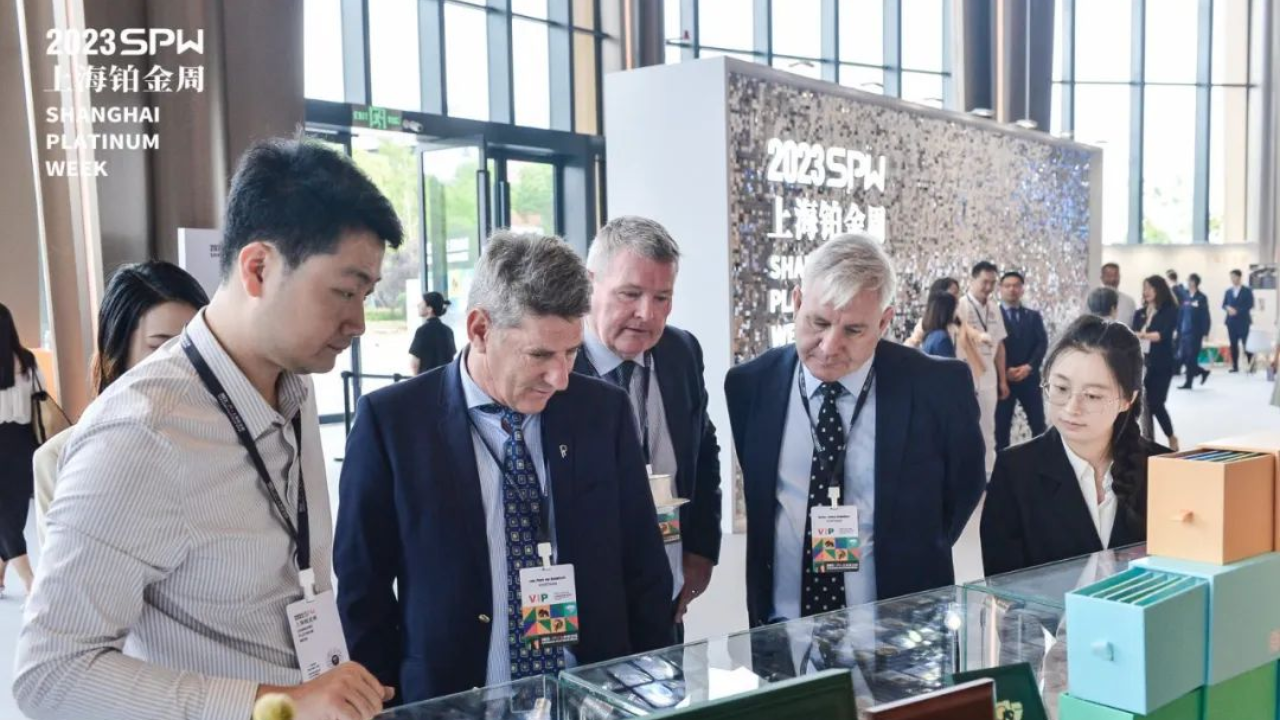
Wang works as an escort interpreter at Shanghai Platinum Week (SPW), 2023
-
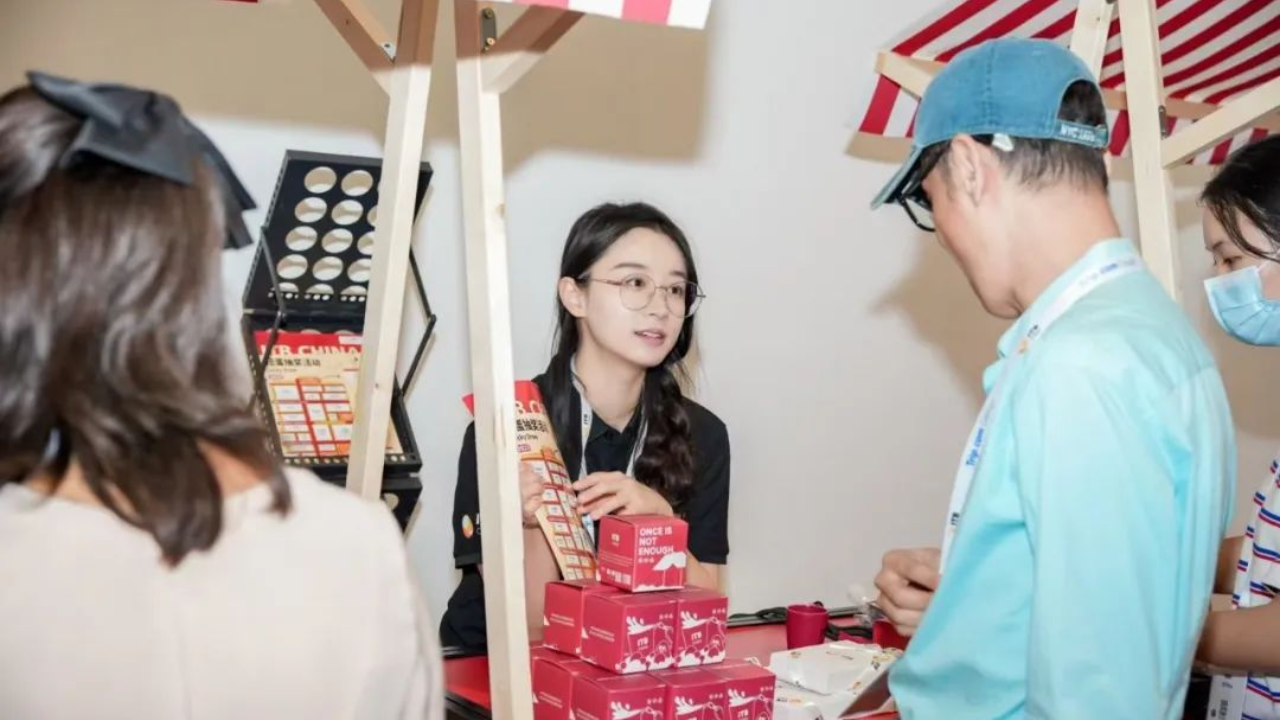
Wang works as an interpreter at 2023 ITB China
-
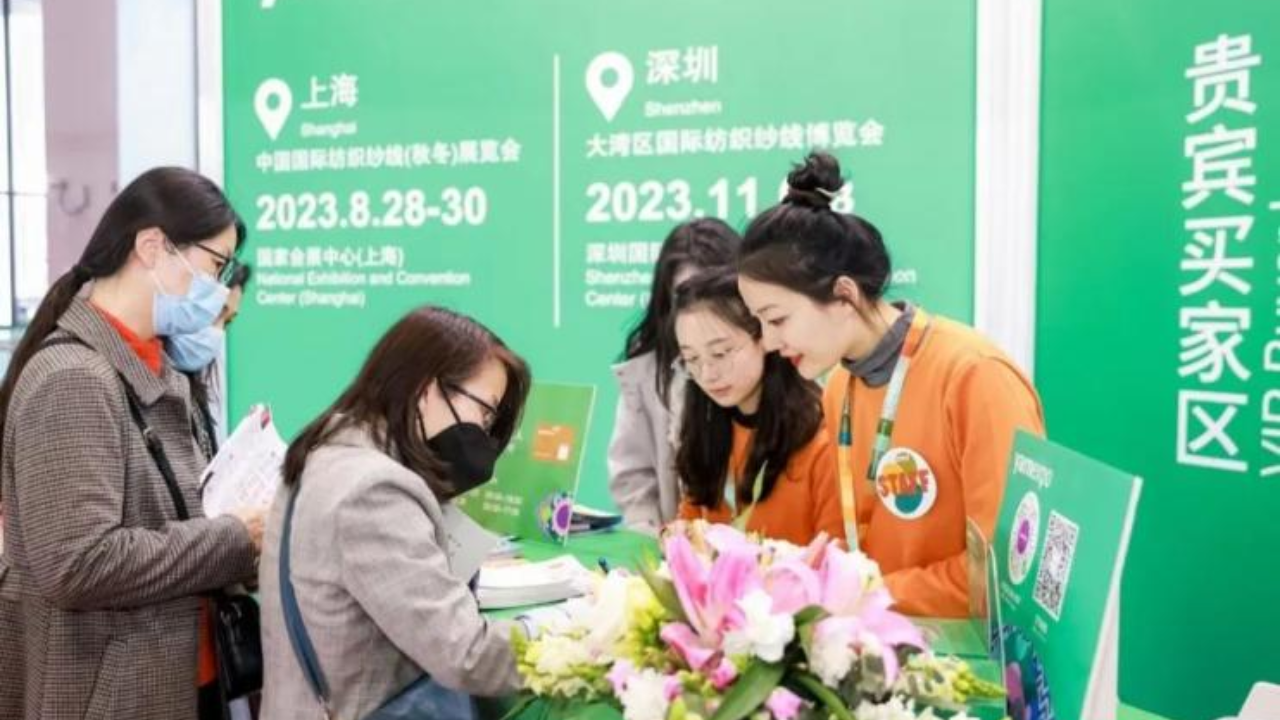
Wang is an interpreting volunteer at the Yarn Expo
-
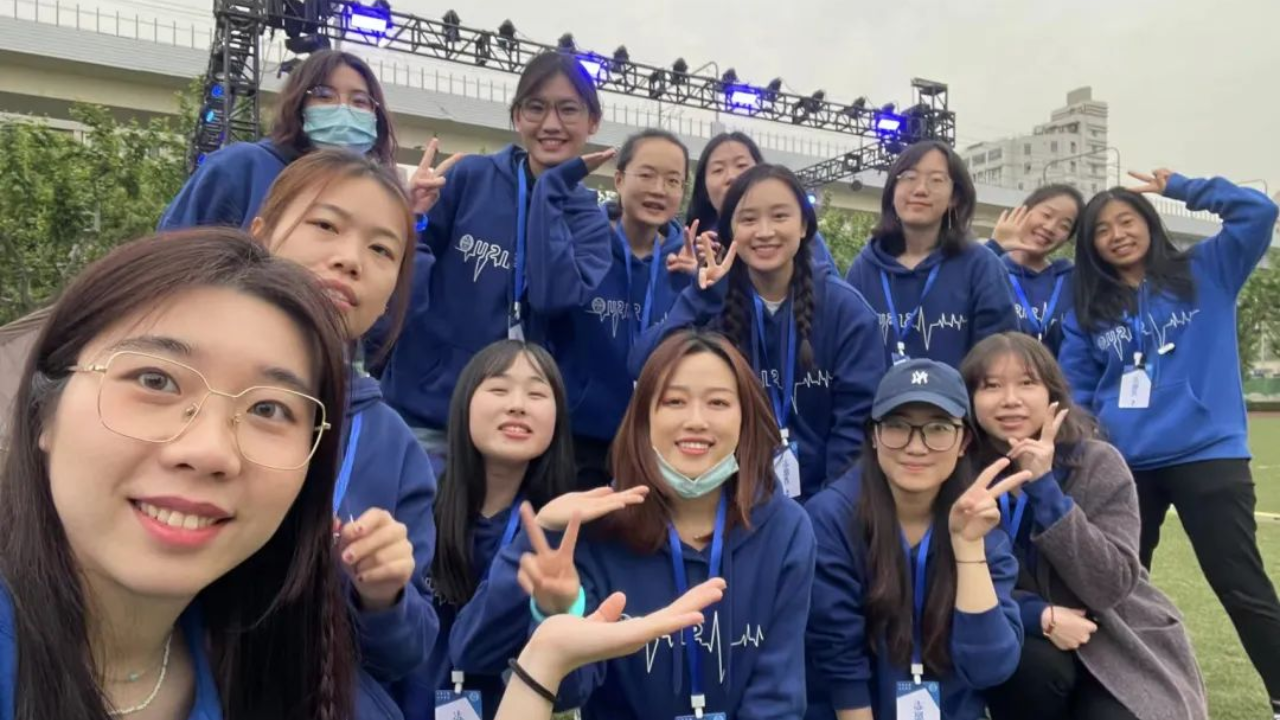
Wang takes part in the school music festival at Hongkou Campus
-
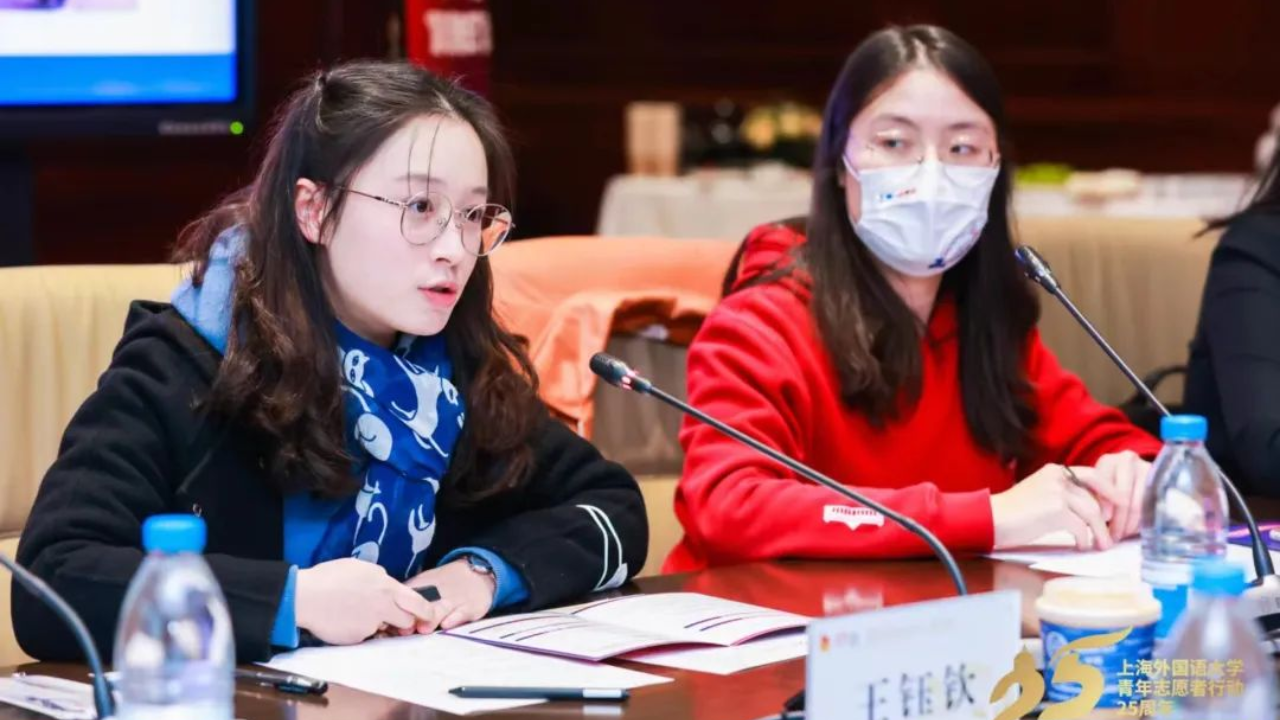
Wang speaks at the sharing meeting of the 25th Anniversary of SISU Young Volunteerism
SISU (Shanghai International Studies University)’s GIIT (Graduate Institute of Interpretation and Translation) offers one of the best MI (Master of Interpreting) programs in China. Curious about what makes it so amazing? Let’s take a glimpse at the daily activities of MI students at GIIT. How do they navigate the complex world of interpreting?
About GIIT
GIIT has three major components: Department of Applied Translation and Interpreting (offering Master of Translation and Interpreting, and Professional Diploma in Conference Interpreting), Department of Translation Studies (offering PhD & MA in Translation Studies), and multiple high-end internship platforms. In this report, we will focus on GIIT’s PDCI and MI students who aim to be professional interpreters with a global vision.
Motivated by Passion
For Wang Yuqin, an English interpreting major from Class 2022, MI is more than a major. It is a window for cultural exchanges and a bridge between her and a wider world. After graduating from SISU’s bachelor program in German Studies, she volunteered to teach in the remote Shache County, Kashgar Prefecture, Xinjiang Uygur Autonomous Region. Despite her busy work as captain of her voluntary teaching corp, Wang maintained a passion for language learning, which motivated her to exert herself to pursue GIIT’s MI program.
When asked why she chose to go to SISU, Wang explained that in high school, she found her interest and potential in language learning. To her, SISU was a dream come true. After joining GIIT’s MI program, she realized that language, with lexicon and grammar as its foundation, could only reach its full potential through communication. Now, she feels that she is on the right track to fulfill her ambition of “bridging different cultures and reaching a wider world.”
Wang finds the professional training in her interpreting classes to be a simultaneously joyful and challenging experience. She has to grind herself so as to get familiar with the terms and subject matters to prepare for each session. It is through this seemingly never-ending process that an interpreter can finally make his or her breakthrough. She described it as a process, in which interpreters keep on breaking new paths until new “circuits” are formed in their brains. The outcome was to transcend oneself and to take one’s interpreting capabilities to the next level.
Wang considers performance under pressure to be the most challenging aspect of her training. Her classes are packed with fresh materials. Her teacher would provide interpreting materials with varying themes and difficulty levels from different sources such as the European Commission’s DG Interpretation (Directorate-General for Interpretation), international high-level official meetings, China’s Reports on the Work of the Government, and interviews with renowned overseas scholars.
While the teacher might provide a broad outline in advance, the students remain unaware of the precise material they are about to interpret so as to ensure the authenticity of their in-class performance. Students would form a circle and take turns interpreting the materials before receiving feedback from both the teacher and their classmates. As Wang admits, the pressure can only be alleviated by sheer competence. In her spare time, Wang often collaborates with her peers to review and preview the materials. This cooperative learning not only enables her to excel in academic demands but also provides a valuable resource for tackling challenges during extracurricular interpreting engagements.
Practice Makes Perfect
The MI students have ample opportunities to apply what they’ve learned in class to practical situations. Wang fondly remembers the highlight of her extra-curriculum work: providing technical support for the Multilingual Relay Interpreting Contest, organized by SISU.
“Although I had worked in the simultaneous interpretation booth before, this time I needed to test the equipment, get familiar with the use of the screen and every button,” Wang said, “This gave me a chance to know more about the booth and gain a deeper understanding of interpreting.”
GIIT also has an interdisciplinary curriculum. Wang’s teacher often says, “Interpreters extend beyond mere interpretation; they are also entrusted with ensuring the seamless functioning of every facet of the meeting.” To develop its students in a more rounded way, GIIT also offers courses on Translation Theories, Law, Current Affairs, International Relations and so on.
Apart from GIIT’s MI program, Wang also enrolled in a graduate program at the SISU’s Honors College. There, she could enjoy resources from the Center for Talent Training and Innovation of International Organizations, which offers individualized guidance and boosts research abilities in the three directions of International Politics, International Development, and International Financial Organizations. Wang believes the theories of economics and politics she mastered at the Honors College is a great complement to the practical abilities she acquired at the MI program.
Taking full advantage of GIIT’s location in Shanghai, an international metropolis where many upscale conferences are held, GIIT students like Wang had numerous opportunities to hone their skills at real-world practice, consistently securing the favor of an increasing number of companies and organizations. Wang confidently asserts, “GIIT’s graduates are highly esteemed on the translation market.”
Translate the Futrue: From SISU to the World
As a leader of Translation and Interpreting education in China, GIIT provides students with an excellent academic platform. Since its establishment, GIIT has been vividly embodying its mission of “Rooted in China and Embracing the World”. According to Wang, what GIIT offers to its students is not only guidance from distinguished scholars and experience, but also a vision to contribute their youthful energy to increasing China’s international influence and boosting China’s modernization.
Nowadays, “AI vs Human Translation” has aroused heated discussion. “What I have learned at SISU enables me to adopt a more objective perspective. I believe that translators and translation machines are not adversaries, but rather collaborators. While machines will assist us and improve our work efficiency, translators are still needed for the communication of the nuances of language and intercultural exchanges that are truly meaningful, vibrant and emotionally engaging.”
With the excellent ability of translation and interpreting, more and more students are setting off from SISU and embark on their life journey to bridge China and the whole world. Inspired by SISU’s motto, Interpret the World, Translate the Future, the students of SISU wholeheartedly embrace their mission. They will fearlessly transcend language barriers, unleashing a resounding symphony of the Chinese spirit upon the world stage.
Press Contact
SISU News Center, Office of Communications and Public Affairs
Tel : +86 (21) 3537 2378
Email : news@shisu.edu.cn
Address :550 Dalian Road (W), Shanghai 200083, China
