
SONG JIANG | Shanghai Zuibaichi Park
Press Contact
SISU News Center, Office of Communications and Public Affairs
Tel : +86 (21) 3537 2378
Email : news@shisu.edu.cn
Address :550 Dalian Road (W), Shanghai 200083, China
Further Reading
SONG JIANG | Shanghai Zuibaichi Park
11 May 2019 | By Zhu Chenye | Copyedited by Zhao Yinfen
-
-
SONG JIANG | Shanghai Zuibaichi Park
|
S |
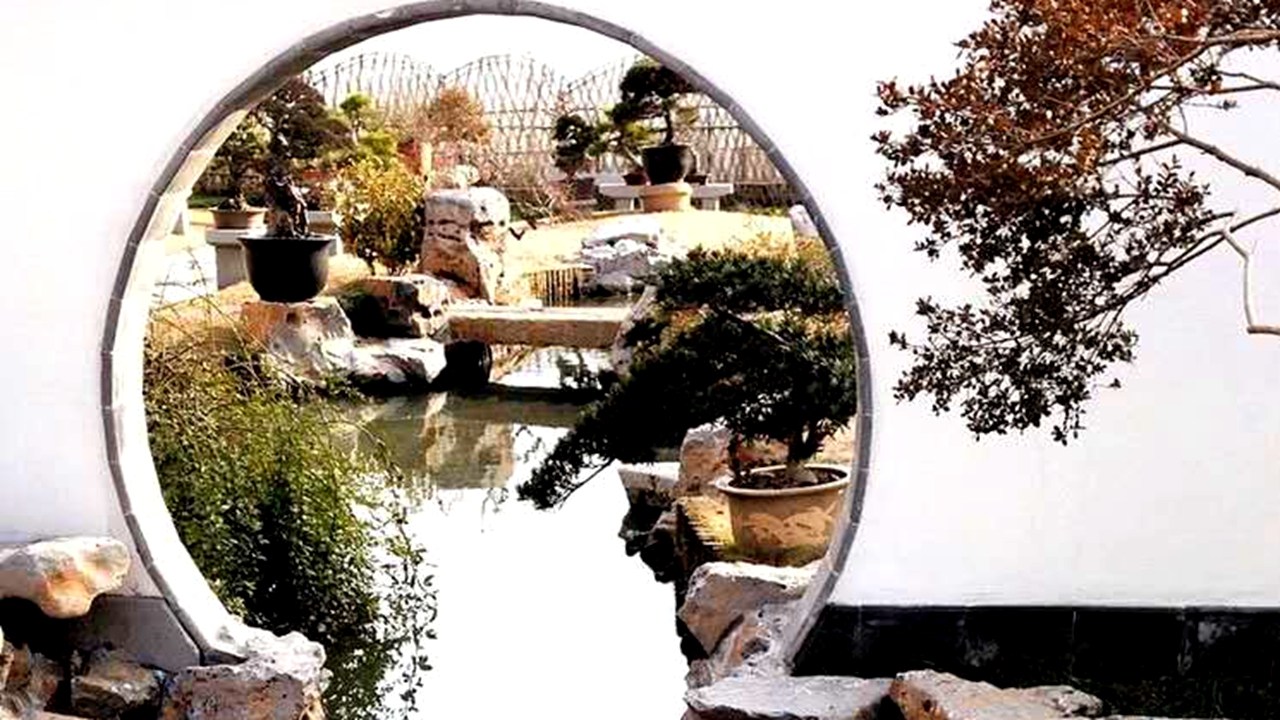
hanghai Zuibaichi Park, one of the five classical parks in Shanghai, national scenic spot ranked AAA, covers an area of 5 hectares. Zuibaichi Park, whose predecessor was the private garden named Guyang Park of Zhu Zhichun, the Jinshi of Song Dynasty. Dong Qichang, the famous painter and minister of Rites, used to recite and create poetry here during Ming Dynasty. From Emperor Shunzhi Period to Emperor Kangxi Period (1644-1722) in Qing Dynasty, Gu Dashen, the principal of the engineering department and the famous painter, rebuilt it on the relics and named it Zuibaichi Park because of imitating the Prime Minister Han Qi of Song Dynasty to admire Bai Juyi.
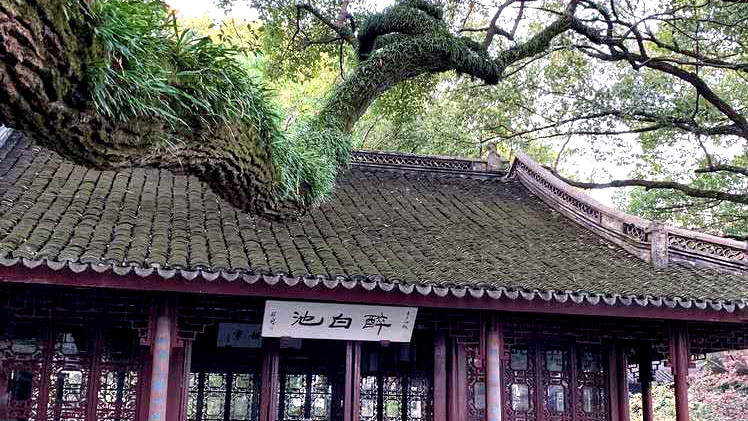
The park is famous for the peony in spring, lotus in summer, chrysanthemum in autumn and plum flower in winter. There are lots of pavilions, terraces, path leading to the loneness maze and maintained precious treasure relics such as the Square Hall, the Boatlike Hut, Reading Hall, the Straw–hut over the Pool of Qing Dynasty, Baocheng Pavilion, the Plum Blossom Hall. Moreover, stone inscription named "Qian Chibifu, Hou Chibifu" by Zhao Mengfu’s handwriting of Yuan Dynasty, Bangyan Portrait of Qing Dynasty were collected as well as a great many works of contemporary calligraphers. Humanitiesand Chinese garden arts are accumulating mixing and passing on here thus Zuibaichi Park is the root of Shanghai and the historical continuance of thousands of years.
The first thing came into my eyes when I entered into the park is the screen wall showing the landscape of Zuibaichi park and the scenery of Songjiang in ancient times. Simian Hall and the Above-pond Thatched Cottage are hidden in luxuriant trees and tall bamboos, presenting beauticul and peaceful circumstance.
Secondly, I saw the Five-color Spring, which is impressive with its beautiful and moving legend about the Taoist Ge Hong. Then I was attached by the Carving Woodwork Hall of Qing Dynasty. The whole building, which has three courtyards, two halls and two wing-rooms, is a classic residence with precise structure and style of the south region of the Yangtze River. The beams in the enhance hall are densely covered with embossed carving of all sorts of flowers and figures.
Through a rockery cave behind Magnolia Court, stone carving of “Nine deer turning Heads Among Ten Deer” was in front of me. It tells the Buddhist stories. However, in the Ming and Qing Dynasties, it reflected the history and legend of Songjiang under long-term interpretation by common people. It has particularly important value in historical stone carving relics across Songjiang. This stone depicts ten vigorous running deer, which look vivid and lifelike. Among these ten deer, nine deer look back at the same direction, and only one deer look at another direction, hence “Nine Deer Look Back Among Ten Deer” is named after. According to Annals of Songjiang Prefecture in Jiaqing Period of the Qing Dynasty: “Nine Deer Look Back Among Ten Deer refer to those people failing to make a good ending”. But it is generally considered that Songjiang used to be a land flowing with milk and honey. Most of officials serving in other regions were all homesick, and finally returned home. Deer is a homonym for “wealth” in Chinese language, which means that people who depended on official’s salary certainly went back to affluent hometown. So “Nine Deer Look Back Among Ten Deer” become synonymous with nostalgias for hometown and returning to their native region. This stone carving work was initially embedded in standing stone beside the stone bridge next to Puzhao Temple in Songjiang. After the demolishment of temple and stone bridge, this stone carving work was relocated to “No.1 Building in Yunjian” for display, and then it moved to Zuibaichi after the destruction of “No.1 Building in Yunjian”.
It took me nearly three hours wandering in the park, and learning the culture of Songjiang, Shanghai and South China. I believe traveling is one of the best way to learn. And Zuibaichi Park is a fascinating place for us to appreciate.
Press Contact
SISU News Center, Office of Communications and Public Affairs
Tel : +86 (21) 3537 2378
Email : news@shisu.edu.cn
Address :550 Dalian Road (W), Shanghai 200083, China
