
Professor Zhang Jinping
He is a professor of counter-terrorism studies at the Middle East Studies Institute of Shanghai International Studies University.
SISU News Center, Office of Communications and Public Affairs
Tel : +86 (21) 3537 2378
Email : news@shisu.edu.cn
Address :550 Dalian Road (W), Shanghai 200083, China
23 January 2015 | By Zhang Jinping | CCTV.com
Professor Zhang Jinping
He is a professor of counter-terrorism studies at the Middle East Studies Institute of Shanghai International Studies University.
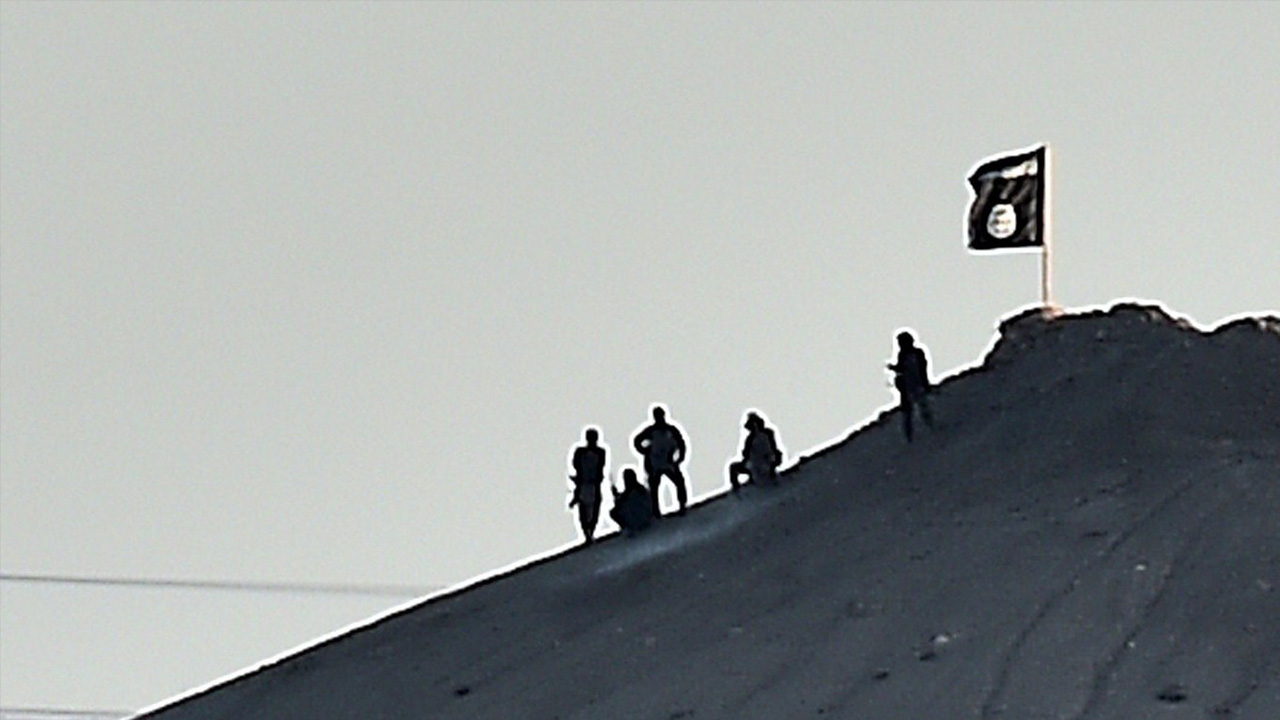
Rise of ISIS
The fundamental goal of the U.S. strikes on the Islamic State of Iraq and Syria (ISIS) is to control the turbulent situation in the Middle East.
|
T |
he fundamental goal of the U.S. strikes on the Islamic State of Iraq and Syria (ISIS) is to control the turbulent situation in the Middle East. Since 2011, the U.S. has implemented strategies to fight against terrorism, and ISIS in particular, based upon the following factors:
Threats exposed by terrorist activities in the U.S.
In 2009, Yemeni terrorists launched an attack on U.S. soil, so the U.S. supported Yemen's Hadi government to eliminate terrorism and conducted continuous drone strikes in the country. But it did not actively seek to prevent terrorist activities that did not pose a direct threat to U.S. security, including terrorist activities in Libya, Iraq and Syria — before June 2014.
Changes in regional situations and in the US leadership in the region
For the purpose of stabilizing and controlling the regional situation while attacking any disobedient regime and consolidating its leadership, the U.S. — with the help of anti-government forces — overturned the Gaddafi regime in Libya and Assad regime in Syria, and exerted pressure on the disobedient Maliki government in Iraq.
Containing the influence of other powers in the region
The U.S. has been maintaining "controllable chaos" in West Asia and North Africa since the turbulence increased in the regions. It encourages public protests in some countries to weaken the authority of the governments but maintains the ability to “control” opposition forces and political situations at critical moments.
It allows terrorists and other criminal forces to participate in anti-government activities to create political chaos and terror, but maintains the ability to strike against terrorism wherever and whenever it sees fit.
The U.S. has been trying to create in the region "chaos" that can only be controlled by itself and conforms to its interests, such as establishing pro-U.S. regimes, so as to expel or contain the influence of other powers in the region and use West Asia and North Africa as pivot points to maintain its global hegemony.
Since turmoil intensified in those regions in 2011, the US has taken three major measures to counter terrorism, which have been adjusted and applied in the strikes against ISIS.
Drone attacks and airstrikes
The U.S. uses drones to strike terrorists, especially those in Yemen and Somalia, and has killed some key leaders of the terrorist groups. And the U.S. has used drone attacks and airstrikes against ISIS.
The U.S. highlighted airstrikes while announcing its strategy to fight against ISIS on September 11, 2014. Compared with drone attacks, airstrikes have greater scope, intensity and frequency. Both rely on the advantages of the U.S. in technology and air dominance, with which the U.S. can avoid casualties while striking against terrorists.
Supporting the local ground forces to counter terrorism
Since withdrawing troops from Iraq in 2011, the U.S. has supported local and international forces to strike against terrorists there; it supports Yemen's Hadi to crack down on terrorist activities; it supports Uganda, Kenya and Ethiopia to dispatch troops to expel the Somali Youth League; it also supports Algeria to play an important role in the regional fight against terrorism.
In October 2012 and April 2014, the U.S. Secretary of State visited Algeria to discuss international cooperation on counter-terrorism in the region.
For the strategy against ISIS, the U.S. focuses on maintaining the stability of the Iraqi government, training the anti-government forces of Syria and assisting the Kurdish forces to strike against ISIS on the ground.
Motivating the international counter-terrorism force
The U.S. relies on the UN to impose sanctions on terrorist groups and depends on its allies to carry out airstrikes and ground activities.
It promotes a "peaceful" transition in Yemen through the UN to strengthen the counter-terrorism capability of the Yemeni government, and with the help of the UN, it propels the forces from African countries to strike against terrorism in Somalia.
For strikes against ISIS, the U.S. draws NATO, Saudi Arabia and Turkey to carry out airstrikes, and actively urges its allies to cut the fund chain of ISIS.
Compared with the Afghan War, launched in October 2001, and the Iraq War in March 2003, the U.S. counter-terrorism measures, since 2011, have revealed different characteristics.
Obama's counter-terrorism strategy is markedly different from that of his predecessor: George W. Bush used counter-terrorism to advance regional transformation and consolidate the US’s regional leadership; Obama seeks to control the changing situations in West Asia and North Africa and maintain the U.S. leadership to promote counter-terrorism activities.
The author is a professor of counter-terrorism studies at the Middle East Studies Institute of Shanghai International Studies University (SISU).
SISU News Center, Office of Communications and Public Affairs
Tel : +86 (21) 3537 2378
Email : news@shisu.edu.cn
Address :550 Dalian Road (W), Shanghai 200083, China

HONGKOU CAMPUS
550 Dalian Road (W), Shanghai 200083, China
SONGJIANG CAMPUS
1550 Wenxiang Road, Shanghai 201620, China
© Shanghai International Studies University | SISU | 上海外国语大学