
Chinese fast food in Prague
Press Contact
SISU News Center, Office of Communications and Public Affairs
Tel : +86 (21) 3537 2378
Email : news@shisu.edu.cn
Address :550 Dalian Road (W), Shanghai 200083, China
Further Reading
BEYOND CAMPUS | Chinese restaurants struggle to westernize in Czech
07 September 2015 | By Wang Yiying, Xu Qianqian and Zhou Jiawen | SISU
-
-
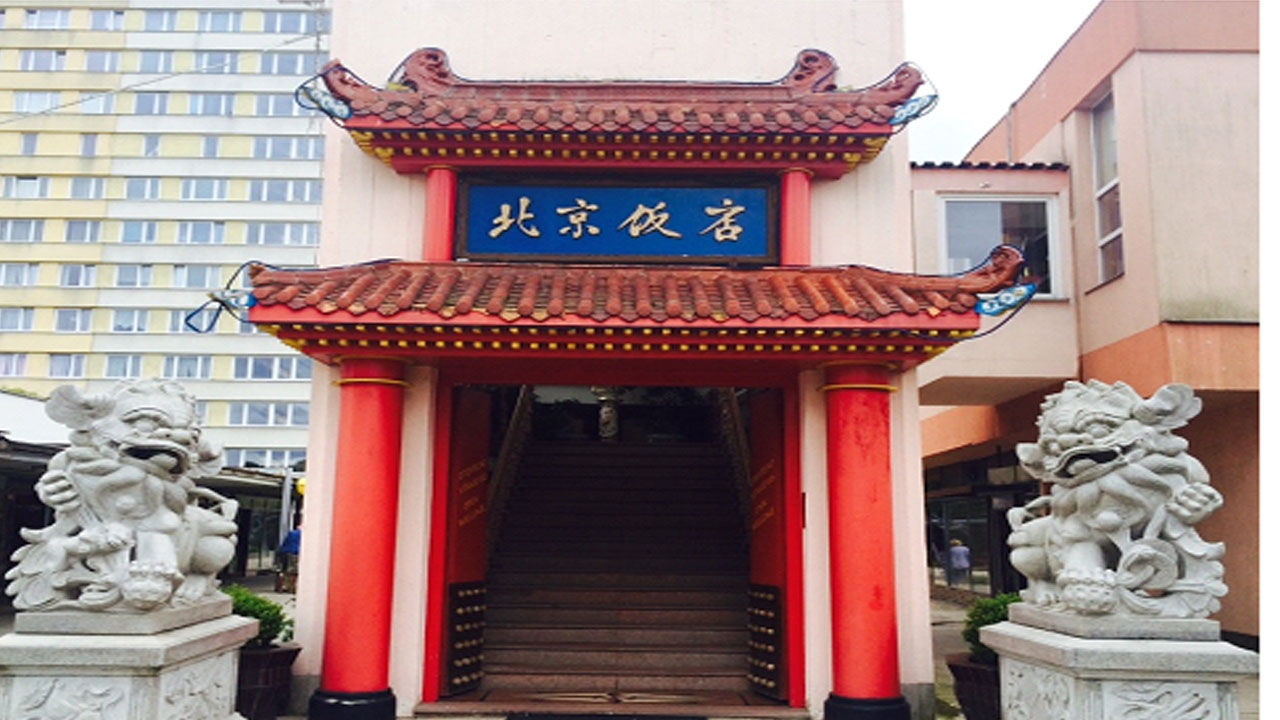
Peking Restaurant
-
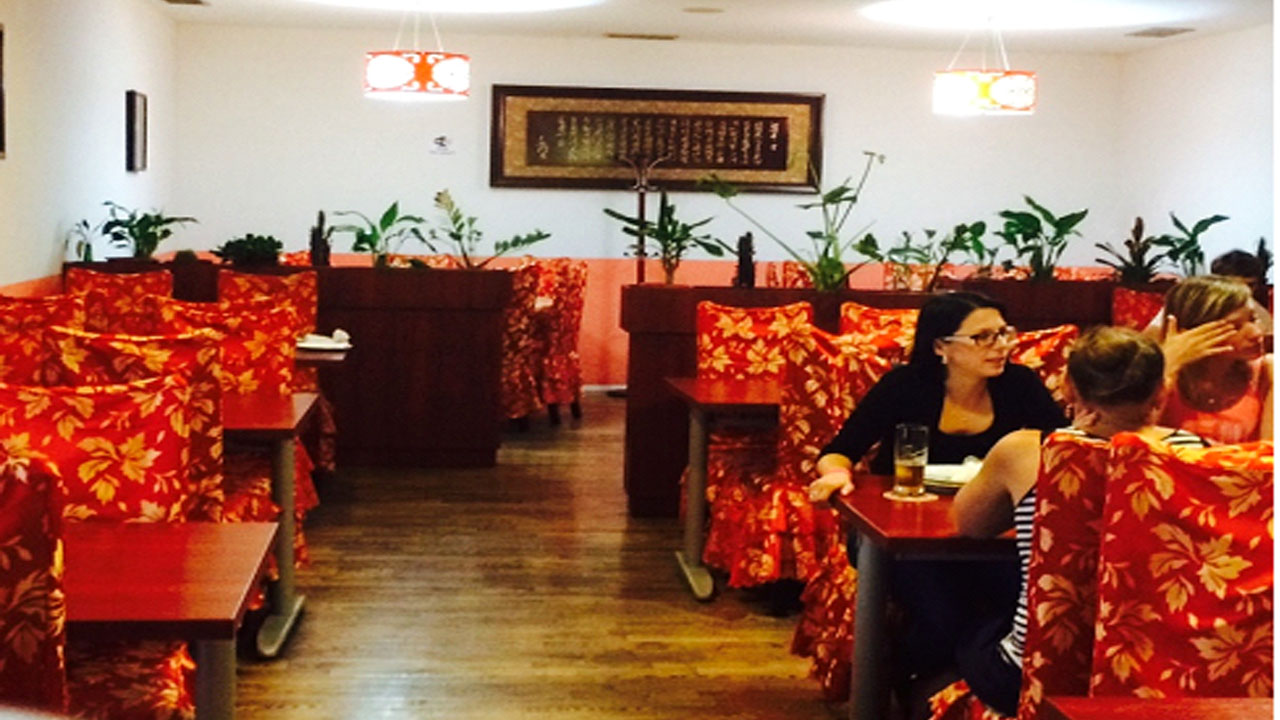
Xintianhao Restaurant in Prague
The overall style of the Xin Tianhao Restaurant is traditional Chinese style, with all of its paintings, lights and handwritings transported from China.
-
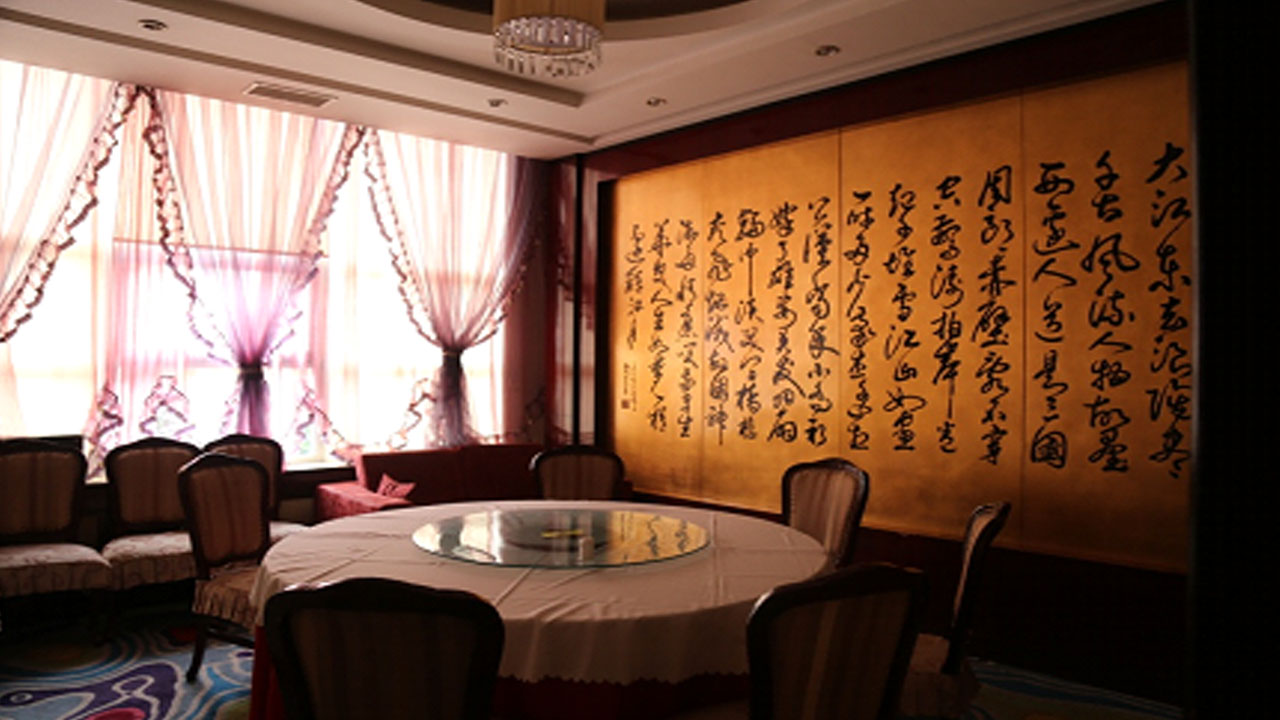
Peking Restaurant in Prague
Many of local Chinese restaurants are also trying innovation in dishes, decoration and space.
This is one of the reports from Prague, Czech Republic, by an overseas student journlist team of Shanghai International Studies University (SISU).
“Local Czechs prefer western-styled Chinese food rather than the traditional one for it is faster and cheaper,” He Lianping, the owner of the Peking Restaurant in Prague, said.
Like most Chinese restaurants in Prague, Peking Restaurant offers two menus: one is for Chinese people and the other is for Czechs.
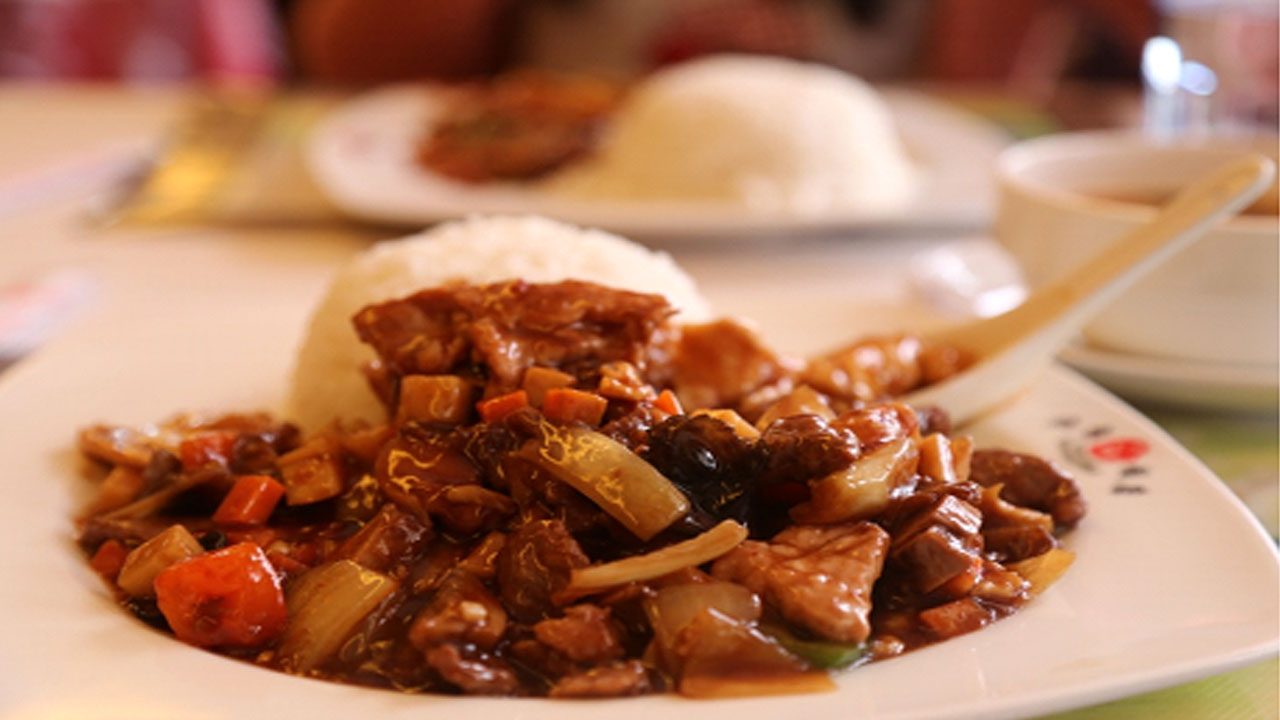
Fried rice with meat, a version of western-styled Chinese food, costs 99krone, while the price of fried broccoli, a version of traditional Chinese food, even doubles in the Peking Restaurant.
“We stop serving western-styled Chinese food at 3pm. That is why at lunchtime Czechs are usually our biggest customers while during dinner Chinese people, mostly Chinese tourists, dominate the customers,” He Lianping said.
Mrazek, a local Czech who just finished his lunch at the Mei Xin Restaurant, said: “I like western-styled Chinese food rather than the traditional one because it is cheaper and more delicious.”
He Lianping added: “But there are also some Czechs coming to try traditional Chinese food recommended by their Chinese friends.”
“After all, countries cook differently and it is hard to compare; it depends on the weather,” Pham Quang Hieu, a college student working in a local Vietnamese restaurant, said.
Kung Pao Chicken and Beijing Roast Duck are two the most popular dishes of the Peking Restaurant, according to He.
He Lianping decided to start the Peking Restaurant with his partner when he travelled to Praque in 1993 from Zhejiang, China. He said she was attracted by the beauty of Prague.
Many of Chinese restaurants’ owners in Prague used to be workers in older Chinese restaurants in Czech.
Yao Jianrong came to Prague in 1992 and opened the Mei Xin Restaurant nine years later. Yao, who is 49 years old now, said: “I once worked for a restaurant before starting my own business with the money I have accumulated.”
Chinese restaurants have developed fast in Prague since 1993, even though the business becomes harder today which was affected by the European down economy.
Wang Qingwen, the 45-year-old owner of the Xin Tianhao Restaurant in Prague, said here are now more than 400 Chinese restaurants, whose owners are mostly from Chinese provinces of Jiangsu, Zhejiang and Shanghai.
Wang left Wenzhou of Zhejiang, China and started working in Prague around the year 2000 when many of Wenzhouneses chose to develop abroad. He opened the Xin Tianhao Restaurant, and it remains alive today.
“Business is getter harder and I miss my family in China,” Wang said.
“The largest problem is too few suitable employee candidates,” He Lianping said,“The employees of Czech’s Chinese restaurants are mostly from China and some are Vietnamese. This is not only because Chinese people know more about traditional Chinese restaurants, but also because they can afford longer working hours.”
Prague’s Vietnamese restaurants have the same problem. “We are open from Monday to Saturday, but Czechs normally work five days a week,” Pham Quang Hieu explained.
“The number of Chinese restaurants has been rising greatly in Prague for recent years, so we have to force price down to attract customers in the market competition,” He Lianping said.
Many of local Chinese restaurants are also trying innovation in dishes, decoration and space.
The overall style of the Xin Tianhao Restaurant is traditional Chinese style, with all of its paintings, lights and handwritings transported from China.
“We added Japanese-Chinese set meal with sushi and self-service hot pot,” the restaurant’s owner Wang Qingwen said,“The tastes of Chinese people are different from those of Czechs. The waiters of my restaurant usually write down the words like “Chinese” or “foreigners” on the list which will be sent to the kitchen, and chefs will add more salt in foreigners’ dishes.”
The Peking Restaurant has nine boxes in which customers can sing and have fun.
According to The Washington Post, the coming months will be trying for Europe's most struggling economy. Most Chinese restaurants are also struggling.
Press Contact
SISU News Center, Office of Communications and Public Affairs
Tel : +86 (21) 3537 2378
Email : news@shisu.edu.cn
Address :550 Dalian Road (W), Shanghai 200083, China
