
The Source of Huangpu River.
Press Contact
SISU News Center, Office of Communications and Public Affairs
Tel : +86 (21) 3537 2378
Email : news@shisu.edu.cn
Address :550 Dalian Road (W), Shanghai 200083, China
Further Reading
CPC100 - The Source of Huangpu River in Songjiang
24 December 2020 | By Yuan Tianyun | Songjiang News
-
-
Photos by Yue Cheng
-
Photos by Yue Cheng
|
T |
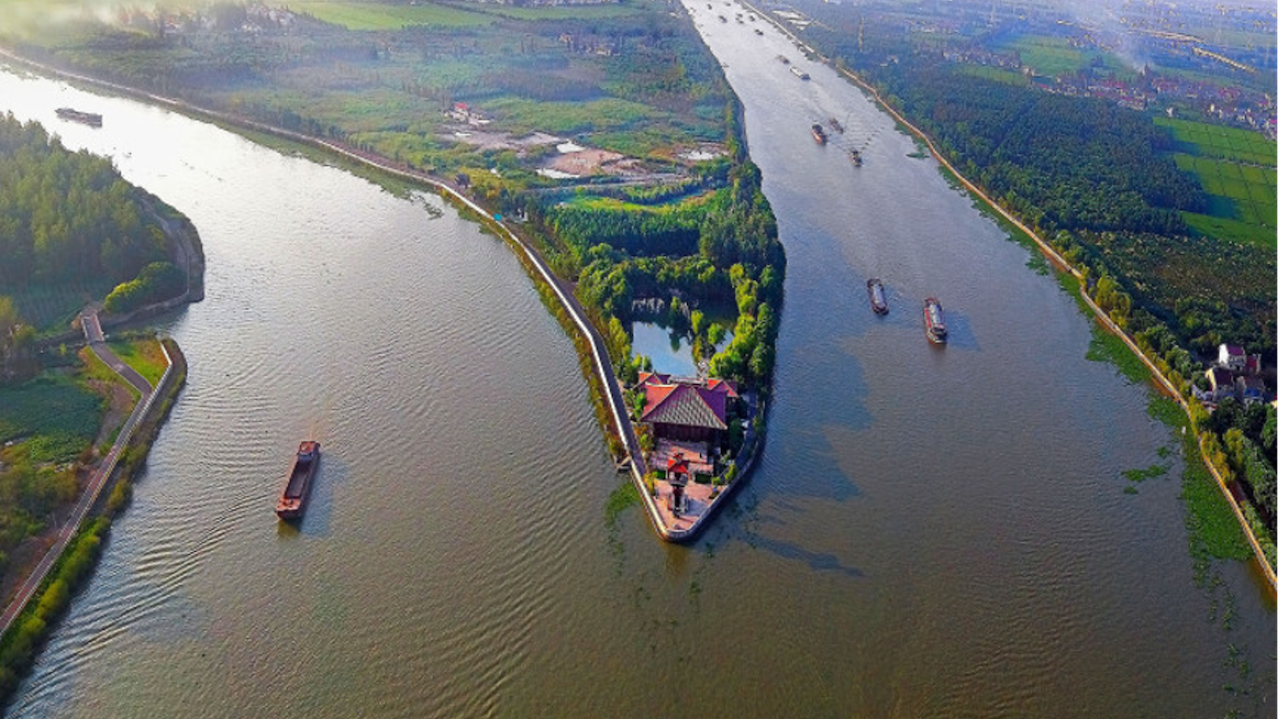
he Huangpu River is about 113 kilometers long, and it begins in Dongxia, a village in south-west Shanghai considered one of the most beautiful and livable villages in China. Often referred to as "the source of the Huangpu River", the village is the place where three rivers meet and Dongxia enjoys a view of misty waters, shuttling boats, swaying reeds, and furious blossoms.
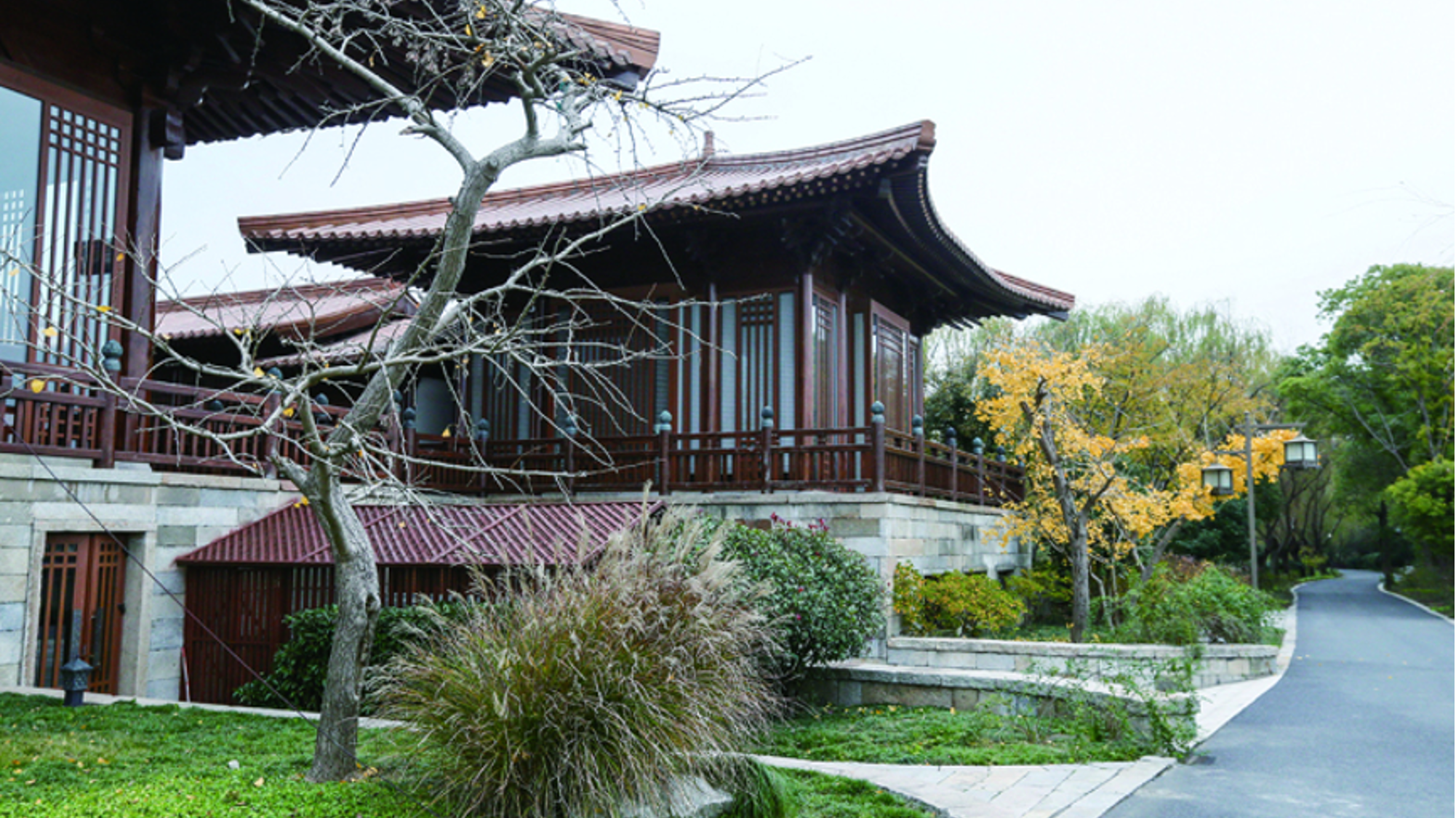
If you walk west along Minta Road, you can see the corniced archway of "The First Banner for Huangpu River" on the road near Xietang River, and that's the entrance to "The Source of Huangpu River", a scenic attraction in Songjiang. It has a small park with bridges and streams. The Tang Dynasty style river museum stands behind a zigzag bridge. Hundreds of historical papers and documents relating to Huangpu River are displayed there. White marble dragons guard both sides of the steps leading to the gates of the museum. The main part of the museum, Chunshen Hall, is named after Chunshen, also known as Huang Xie, one of the four legendary princes from the Warring States Period in ancient China. The legend has it that Chunshen helped digging the Nanjiang River, channeling water from Taihu through ancient Jiaxing, Fengjing and Songjiang cities to the sea. Later, Nanjiang was renamed as "Huangpu". To commemorate Huang Xie, the river is also sometimes called Chunshen River, Shenjiang or Xiepu.
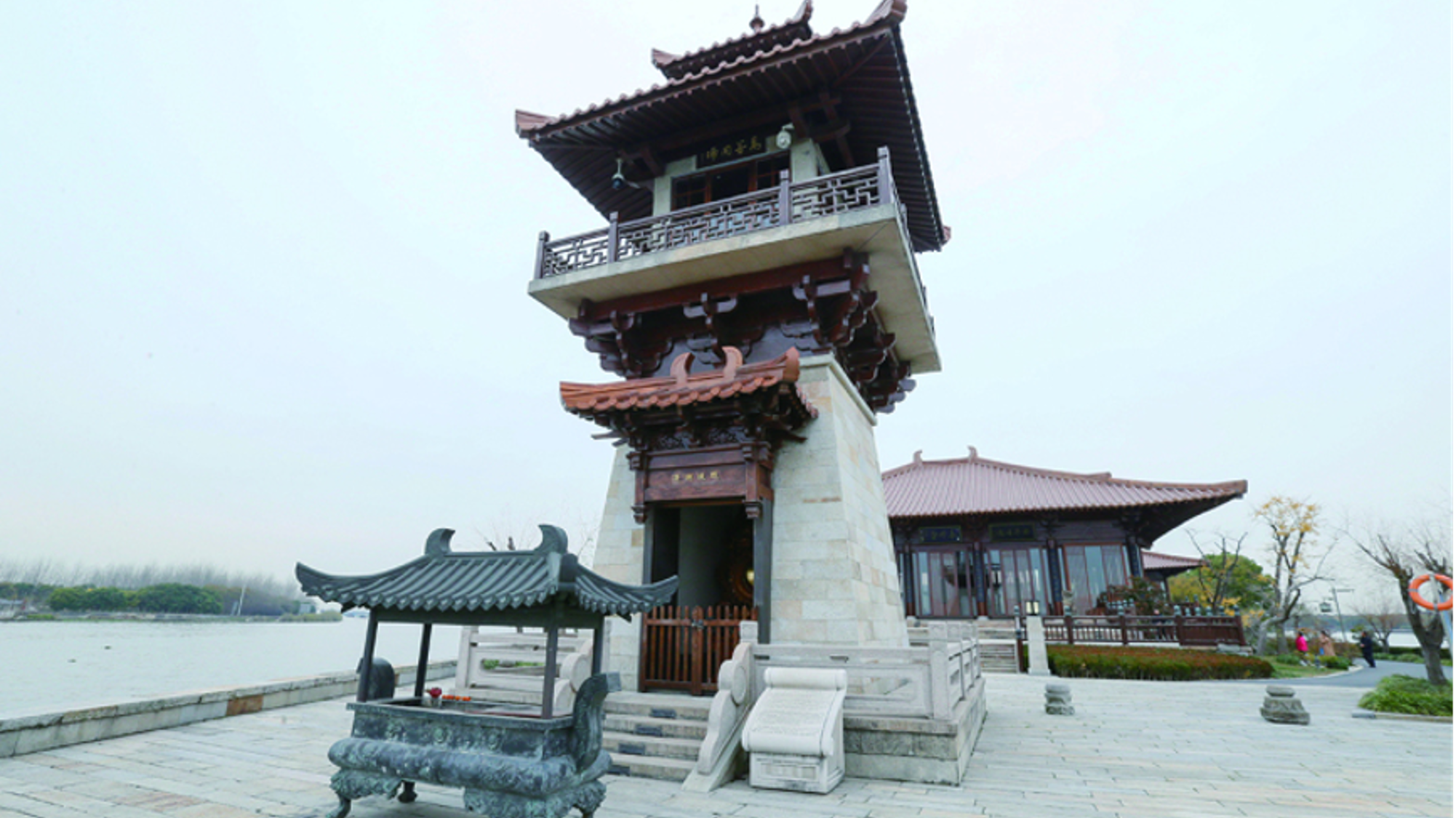
Outside the Chunshen Hall, a lighthouse stands at the tip of land, marking the bifurcation of the river: the waterway forks here with one branch reaching Suzhou in Jiangsu Province, the other Huzhou and Hangzhou in Zhejiang Province. A big brown stone, bearing a red "0", is the zero-boundary stele for the Huangpu River, a prized photo spot for cyclists and photographers. Here, at dusk, everything goes silent and the colours of the sunset dance on the river. Lights from the lighthouses and oases, and from passing tugboats, glint in the dusk. The scenery is so beautiful that Dongxia was named one of the "Twelve Brilliant Sceneries" in Songjiang in 1998.
"The Source of Huangpu River" has long been a transportation hub. During the Tang Dynasty, soldiers patrolled Ganlu Bridge, an ancient structure made of wood and stone, allowing vendors to trade, and keeping pirates at bay. After the old Ganlu bridge sank into the water, the Triangle Crossing was built - during the Qing Dynasty - and quickly became a popular route for villagers from the Wushe, Maogang and Shihudang areas.
The confluence of the three rivers attracts ships from Jiangsu, Zhejiang and Shanghai. In the days before cast-in-place technology was available, 90% of the yellow sand, stones and floor slabs for house-building would travel from Zhejiang to Shanghai via this route. Agricultural products such as pork, vegetables and fruits were shipped from Jiangsu to the other two cities. There is lots to learn here about the history of Shanghai, Jiangsu and Zhejiang.
In recent years, the water quality in the upper reaches of the Huangpu River has been improved by dredging, sewage treatment and control. These techniques help ensure the safety and cleanliness of drinking water. Crabs, perch and bream, all local delicacies, also thrive in the river.
Press Contact
SISU News Center, Office of Communications and Public Affairs
Tel : +86 (21) 3537 2378
Email : news@shisu.edu.cn
Address :550 Dalian Road (W), Shanghai 200083, China
