
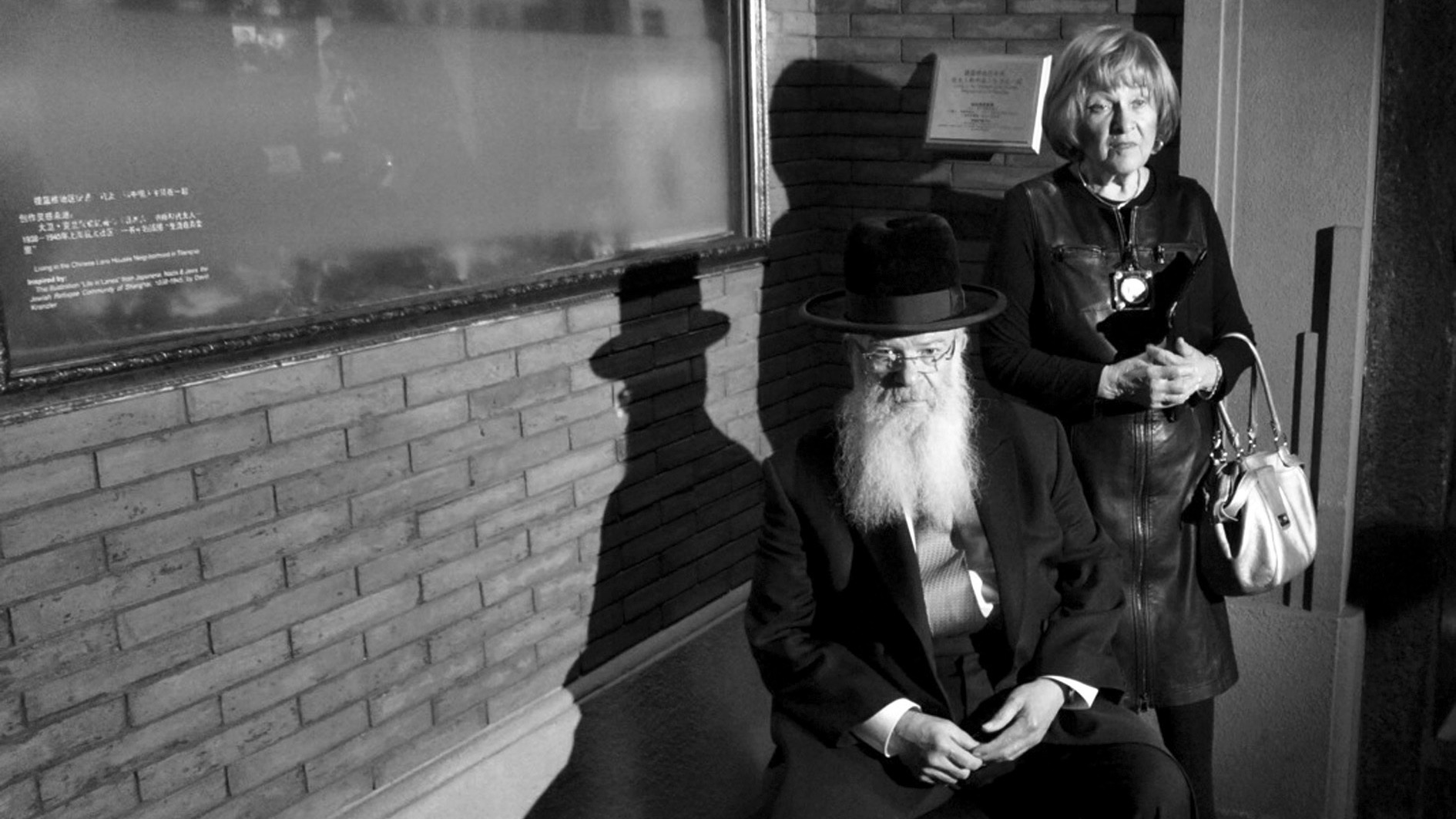
Rabbi Walkin
Press Contact
SISU News Center, Office of Communications and Public Affairs
Tel : +86 (21) 3537 2378
Email : news@shisu.edu.cn
Address :550 Dalian Road (W), Shanghai 200083, China
Further Reading
JEWS IN SHANGHAI | A Japanese Office Cut off Rabbi Walkin’s Beard in a Swoop
15 September 2016 | By Huang Yuan / trans. Huang Xie'an | Copyedited by Gu Yiqing
Editor's Note: During the World War II, more than 30,000 Jews, under attack by the Nazis in Europe, fled to Shanghai, China and 16,000 of them took refugee in this city. Meanwhile, the local Shanghai people were also in an abyss of pain inflicted by the Japanese invasion. Though the time was difficult, gratitude and mutual friendship lived on in the heart of the Jewish and Chinese people. The Shanghai Jewish Refugees Museum and Shanghai International Studies University (SISU) launched a initiative early this year to present those touching stories in Chinese, English, German and Hebrew. This is one of the selected stories in the project to commemorate the history of Jews in Shanghai.
|
I |
t is a real incident witnessed by a Jewish girl: “Ghoya took out a saber from the scabbard, held it high and then cut down. I was scared out of my wits, unable to speak. I thought he would chop off my father’s head, but finally my father’s beard. Afterwards, the soldiers burst into laughter.”
This is also a recurrent memory of Mrs. Chaya Small, the girl witness of the incident, who is now over 80. As a member of a Jewish delegation to say “thank you” to Shanghai in 2014, this former refugee girl gave the account of how her father had suffered from the violence of the Japanese King of the Ghetto.
In 1941, her father Rabbi Samuel Walkin got the visa to Japan to flee the Holocaust, and after travelling two weeks on the Siberian Railway and a short stay in Kobe, the Walkins arrived in Shanghai, including Chaya who was born in Poland in 1934.
Samuel Walkin was a rabbi and became a leader of the Jewish refugee community in Shanghai. Almost every day, he had been busy helping the Jewish refugees rebuild their life, while Chaya and her sister Esther went to a school sponsored by the Sephardi Jewish society.
In 1943, the Japanese occupiers declared the Restricted Sector for Stateless Refugees (the Shanghai Ghetto).
As Chaya recalled, “Life was hard in the ghetto. Our family was a lucky one. We had been able to live in one room, while there were 40 in the building sharing a toilet. Food was scarce and disease was rampant there. People fell dead on the street from time to time. There were also thousands of homeless Chinese in Hongkew (now called Hongkou) fleeing the Japanese raids.”
“Once I was seriously ill and must see the doctor outside the ghetto. My father took me, then 7 years old, to the office of Ghoya, the Japanese administrator of the Shanghai Ghetto. Ghoya was well known for his cruelty to the refugees, so we’re very afraid. But we had no other choice because Jewish refugees were not allowed to leave without a special permit from him.”
“My father asked for the permit, after explaining my sickness. Then something horrible happened. Rabbi Walkin was ordered to put his head on Ghoya’s desk. He did, as no one could disobey Ghoya’s order. Then, Ghoya took out a saber from the scabbard, held it high and then cut down. I was scared out of my wits, unable to speak. I thought he would chop off my father’s head, but finally my father’s beard. Afterwards, the soldiers burst into laughter.”
Life was not easy for the Jewish refugees in Shanghai, but Chaya still recounted her childhood years in the city with gratitude. Her parents had managed to give them a normal life, and they had quite a lot of close friends. Supplies were limited, but everyone was ready to share what they had with other people in even worse situations. Rabbi Walkin hired a local nanny, whom they called “amah”, to take care of the family, and the nanny was paid with food which would translate directly into survival in that special context. Although they did not speak the same language, the nanny and the Walkins got along very well like a family. The nanny took very good care of each child, taught them singing, and made dolls with left-over cloth. Chaya’s memories of her amah are very sweet. “She gave us warmth and safety during those unsettling years,” she said. “Anyone who can recognize her or know her children, please let us know. We’d be extremely happy.”
Press Contact
SISU News Center, Office of Communications and Public Affairs
Tel : +86 (21) 3537 2378
Email : news@shisu.edu.cn
Address :550 Dalian Road (W), Shanghai 200083, China
