
Prague handmade puppets
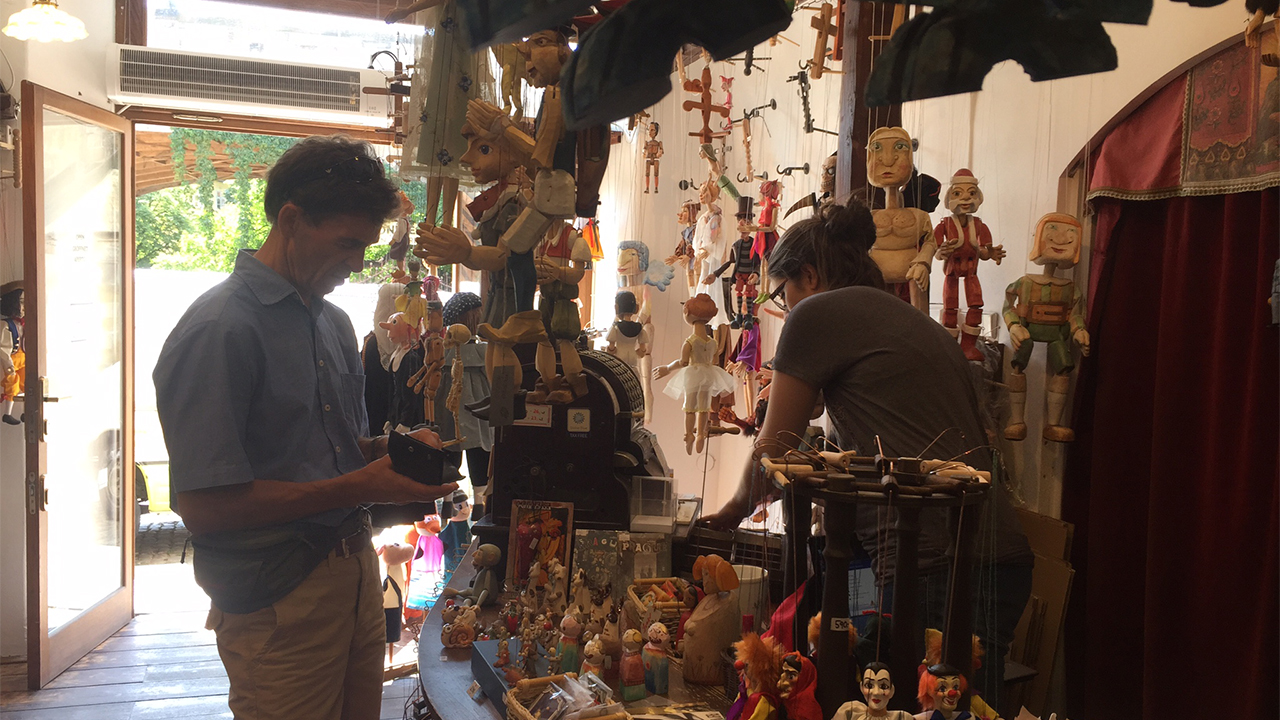
A customer is selecting puppet in a Prague’s puppet shop named Galerie Michael. [by Fu Linmeng]
SISU News Center, Office of Communications and Public Affairs
Tel : +86 (21) 3537 2378
Email : news@shisu.edu.cn
Address :550 Dalian Road (W), Shanghai 200083, China
15 September 2015 | By Fu Linmeng, Chen Xiaoyang, Dai Yijing and Zhou Jiawen | SISU
Prague handmade puppets
A customer is selecting puppet in a Prague’s puppet shop named Galerie Michael. [by Fu Linmeng]
Prague handmade puppets
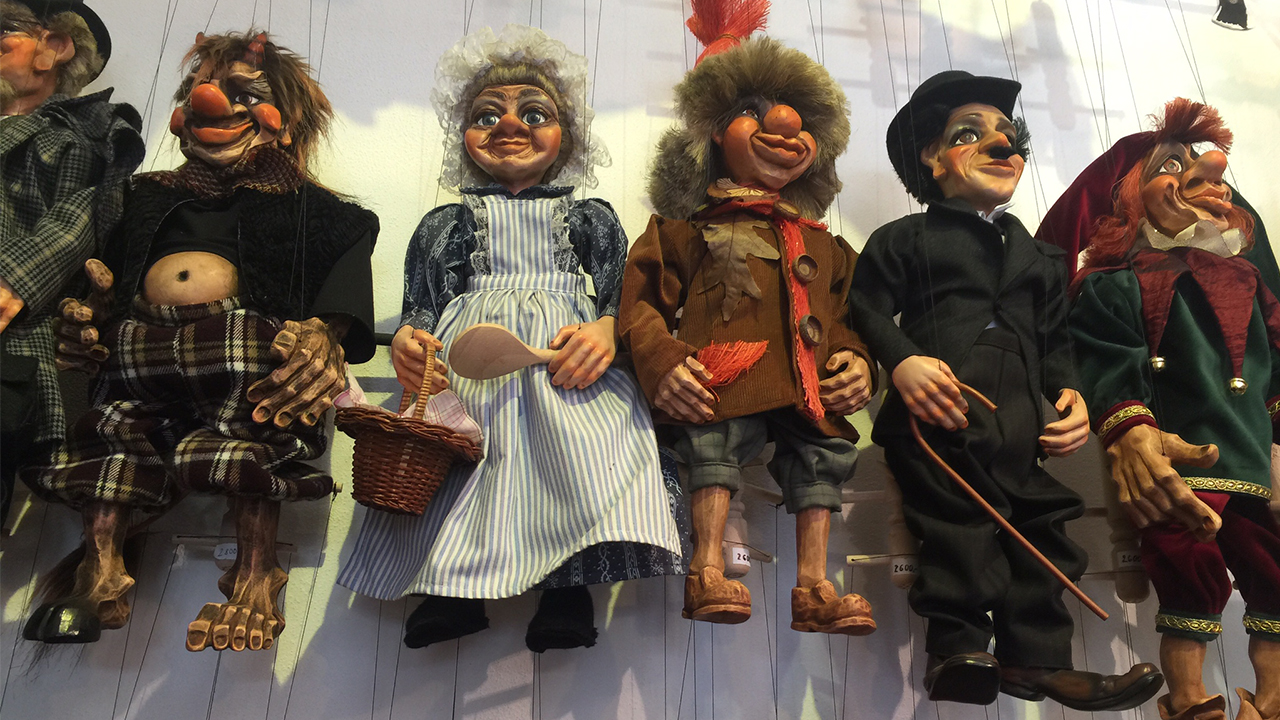
A Prague’s puppet shop named Galerie Michael. [by Fu Linmeng]
Prague handmade puppets
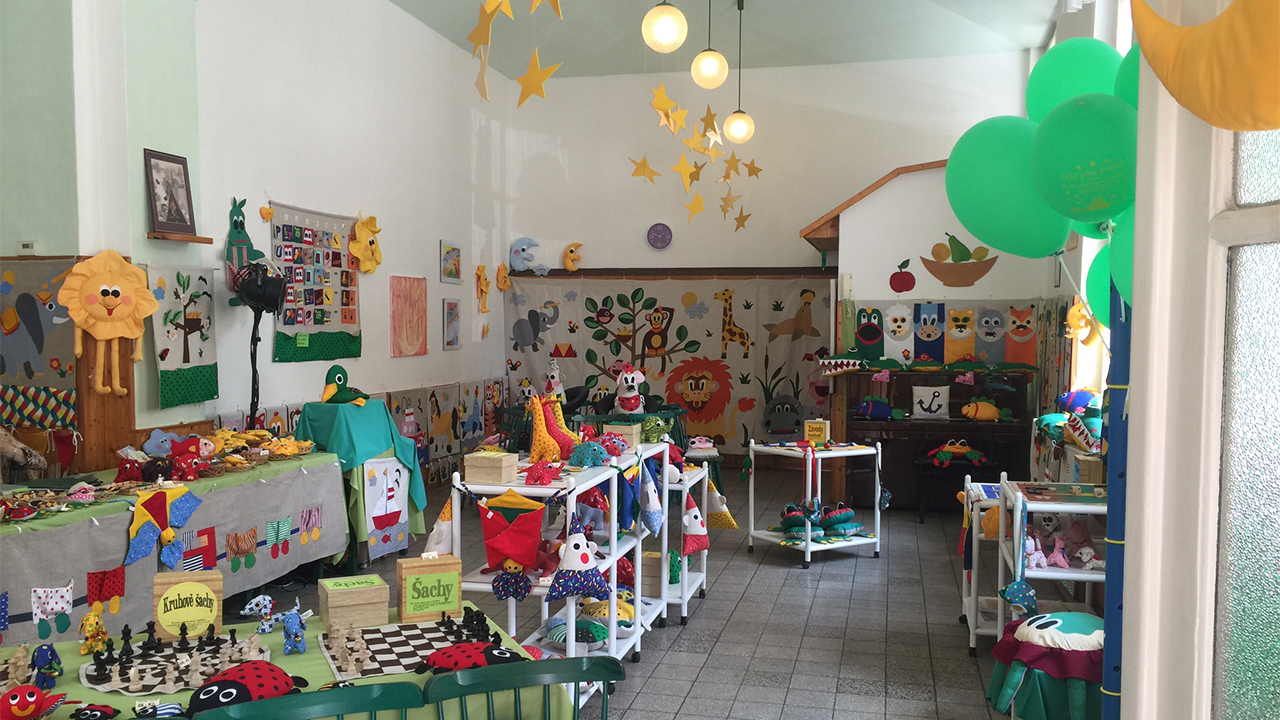
A small marionette workshop named PAVEL TRUHLÁŘ in Prague. [by Fu Linmeng]
Prague handmade puppets
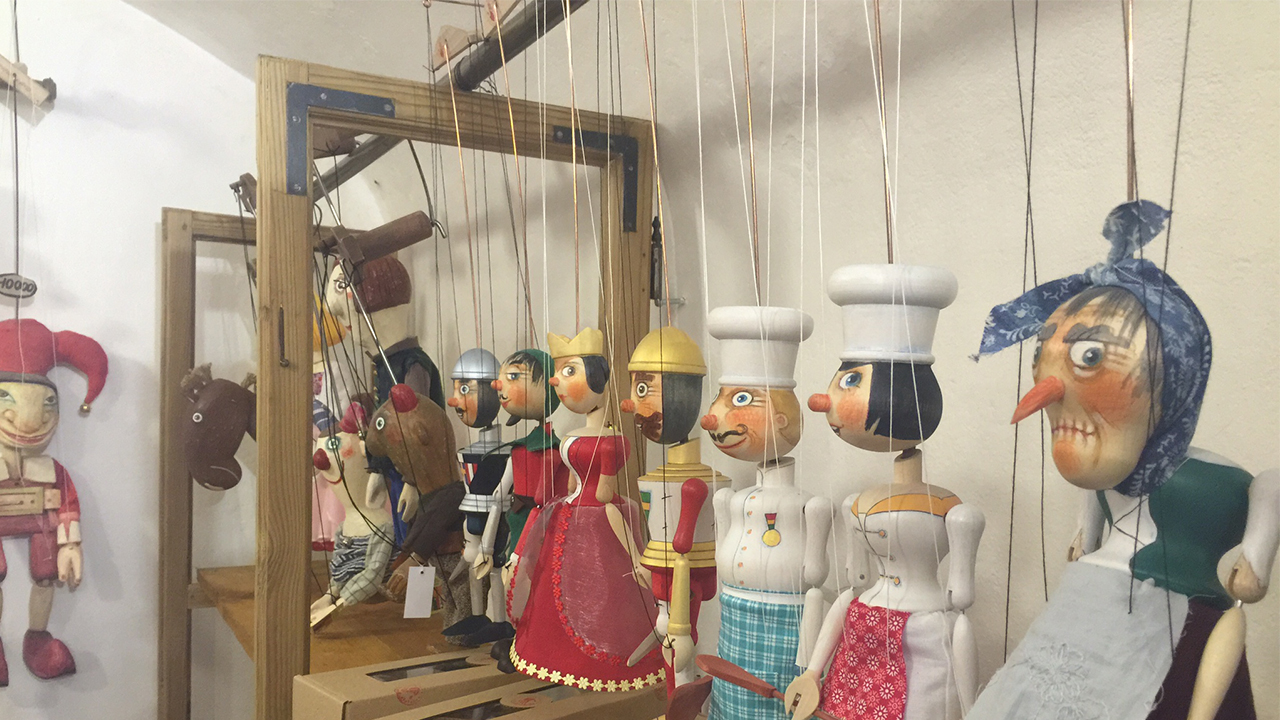
The shop Truhlář Marionety. [by Fu Linmeng]
Editor's Note: This is one of the reports from Prague, Czech Republic, by an overseas student journlist team of Shanghai International Studies University (SISU).
|
T |
here are hundreds of puppet shops down the streets in central Prague. “If you stroll on these streets, you will see various puppets which are even more than tourists in Prague,” Františka Nekvasilová, who works for a small puppet shop near the Charles Bridge of Prague, said in pride.
This 22-year-old shop called Truhlář Marionety has displayed marionettes in all sizes and shapes, all of which are designed and created by the shop’s employees.
“I have always wanted to be a puppeteer since I was attracted by marionettes’ painted faces shown on TV in my ten years old. I have tried on my own to design and make a puppet with potatoes and papers,” Františka Nekvasilová said when she was sewing a dress for a new-made marionette.
Prague’s puppet shops can be roughly divided into two categories: one sells self-made puppets, like the shop Truhlář Marionety; the other sells puppets made in craftsmen’s houses or flats.
“There is even cooperation among family members; for example, some carve the wood and others make clothes. A simple puppet may take days to make while an elaborate one seems to take longer,” Denisa Bartošová, assistant of a Prague’s puppet shop named Galerie Michael, said,
“Craftsmen usually visit our shop monthly to sell their hand-made puppets. What we need to do is book puppets from them.”
Marionettes, one important component of Czech’s traditional culture, initially came from India and then were introduced to Czech by England, France and Italy throughout the 16th and 17th centuries.
Czechs were not allowed to use the Czech language under the rule of the Habsburg Monarchy which reimposed Catholicism and adopted a policy of gradual Germanization. They could speak Czech only in marionette shows staged for amusing the public in informal settings of the countryside.
“The underground marionette shows have saved the Czech language and culture during a period when there was no TV and Internet,” Františka Nekvasilová said,
“Shortly afterwards, almost every family has their own marionette to play for children to communicate deep thoughts hidden in jokes.”
Puppets, which were used for animation movies or theatre plays, have now become pieces of art for decoration.
Ivan Steiger, a filmmaker and cartoonist, established a toy museum in Prague ten years ago to display his family collections of Europe-made toys, of which most are 150 years old and are handmade.
Anezke, a worker of the museum, pointed at a group of bear puppets, saying that only solid crafting can make each of them “special”.
However, problem emerges for the growing demand of Prague’s puppets.
“Tourists are the primary consumption groups of puppets, though local theatres sometimes buy for performance. The growing uses of modern machines increase copies and decrease costs. A machine-made plastic marionette may generate one-tenth the cost of a handmade wooden one, while the later in normal size may sells for 300 Euros, almost 20 times the price of the former in the same size,” Františka Nekvasilová said,
“But focusing on quantity alone does not ensure quality. That is what I really worry about.”
In China, industrial mass production has also heavily hit traditional handcraft culture, which includes not only the demanding skills but also the attitudes towards life.
“I am always afraid that traditional handcrafts will only be seen in museums someday,” Františka said in frustration.
In order to inherit traditional techniques, a small marionette workshop named PAVEL TRUHLÁŘ was started in Prague to teach individuals and groups how to make and handle marionettes.
Zdenka Owenová, the workshop’s manager, said: “We provide courses and cooperate with schools in long-term projects about puppet shows.”
“We have been keeping our tradition for 22 years since the puppet shop opened. Whether the modern technology would destroy the craftsmanship or not, I would devote my life to puppet making,” Františka Nekvasilová said.
SISU News Center, Office of Communications and Public Affairs
Tel : +86 (21) 3537 2378
Email : news@shisu.edu.cn
Address :550 Dalian Road (W), Shanghai 200083, China

HONGKOU CAMPUS
550 Dalian Road (W), Shanghai 200083, China
SONGJIANG CAMPUS
1550 Wenxiang Road, Shanghai 201620, China
© Shanghai International Studies University | SISU | 上海外国语大学