
Dong Qichang Museum of Calligraphy and Painting Art
Press Contact
SISU News Center, Office of Communications and Public Affairs
Tel : +86 (21) 3537 2378
Email : news@shisu.edu.cn
Address :550 Dalian Road (W), Shanghai 200083, China
Further Reading
SONG JIANG | Dong Qichang Museum of Calligraphy and Painting Art
11 May 2019 | By Zhang Xin | copyedited by Deng Boyin
-
-
Dong Qichang Museum of Calligraphy and Painting Art
-
Dong Qichang Museum of Calligraphy and Painting Art
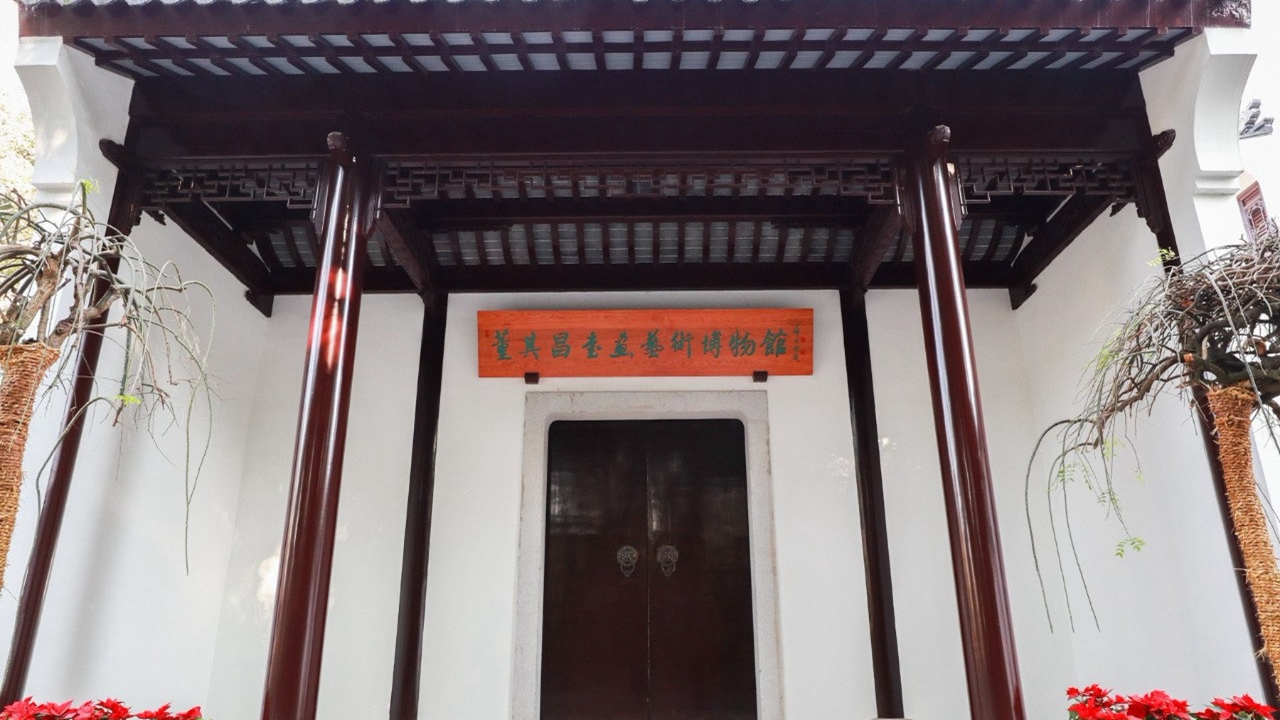
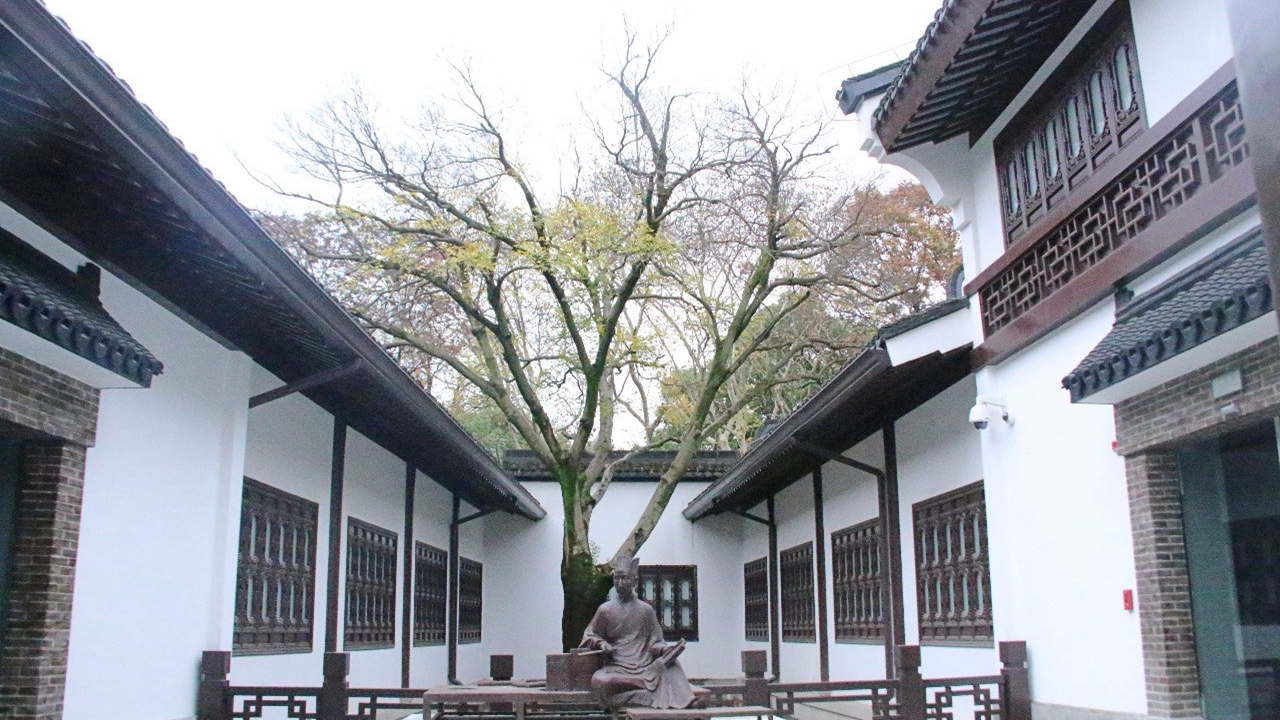
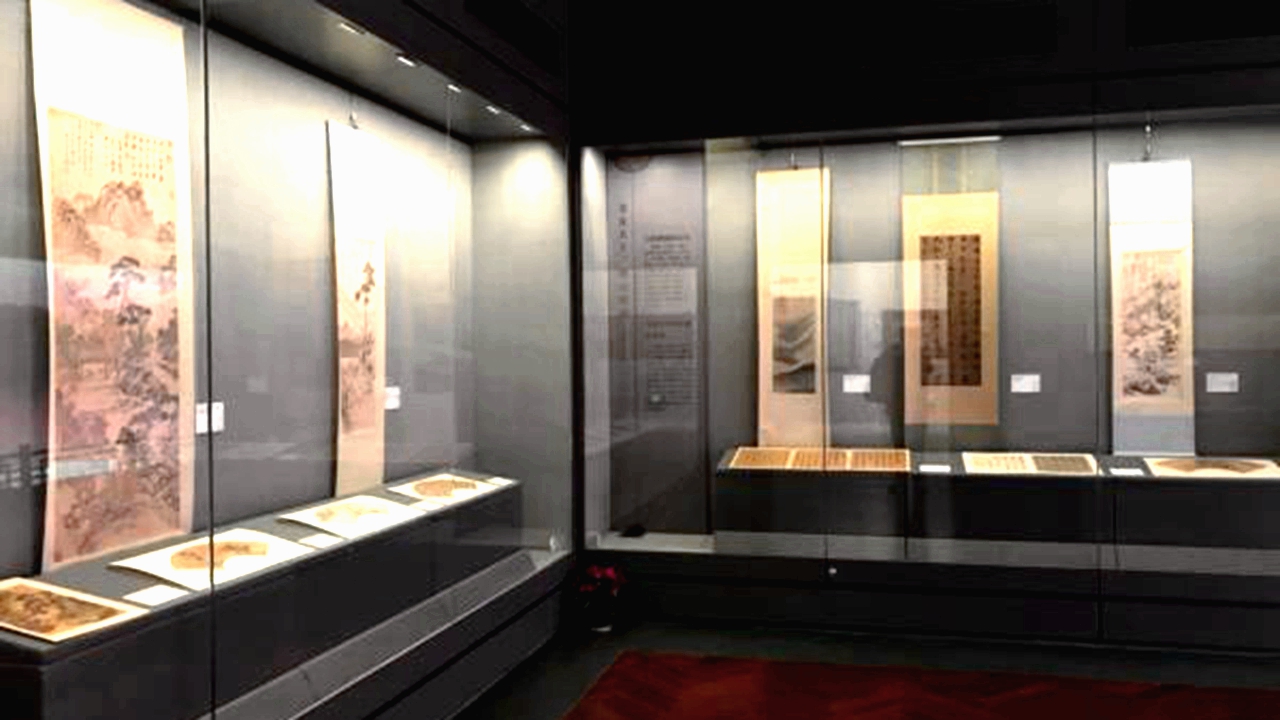
n 25th December of 2018 saw the opening of the Dong Qichang Museum of Calligraphy and Painting Art which had been in construction and preparation for three years. Situated at the Zuibaichi Park in Songjiang District, one of the five classic parks in Shanghai, where the constructions are of painted white walls and dark blue bricks as roofs, Dong Qichang Museum of Calligraphy and Painting Art is standing under the interwoven leaves of trees with an air of relief and elegance. It is recorded that this is the very place where Dong Qingchang used to be, drinking alcohol while writing poems. The museum covers an area of 1500 m2, with 1200 m2 newly built and 300m2 already there. The museum is divided into three sections: the main exhibition hall, the exchange exhibition hall and the office place. Songjiang District has a long history of calligraphy and painting art, stretching over hundreds and thousands of years, amid which were many practitioners and theorists of calligraphy and painting art: from Lu Ji, Lu Yun, Zhang Han, Gu Yewang in the West Jin Dynasty, to Zhao Mengfu, Guan Daosheng, Ren Renfa in the Yuan Dynasty; from Zhu Kongyang, Shen Du in the Ming Dynasty, to Shen Quan, Wang Hongxu, Zhang Zhao in the Qing Dynasty, and to Lu Weizhao, Bai Jiao, Cheng Shifa in modern times, among whom Dong Qichang raised some discussions that has impacted the developing path of Chinese calligraphy and painting art, and laid very important foundations for the south Yangtze River culture and Shanghai culture. Dong Qichang, in the Ming Dynasty, was born in Shanghai county (now Maqiao, Minghang District), and then moved to Huating (now Songjiang District). As a great calligraphy and painting art master, he took what the predecessors had left and integrated the greatness of that into his own skills, affecting the history of art following him. He drew an analogy between the two sects (southern and northern sects) of Buddhism and the style of landscape paintings of different dynasties, and came up with the possible factors that affected the forming of the two schools of landscape painting style, that is, the different mindsets and picturesque scenes of scholars and non-scholars in Chinese art history. In his theory, the northern sect is the product of the royal imperial families. Artists in this sect were mostly noblemen and court painters. Their strokes of drawing were mainly strong and hard, reproducing the mountains and waters from the north. The southern sect was mainly of scholar-bureaucrats and secluded talents who painted the refined, elegant, plain and soft kind of works for the purpose of self-amusement and emotion expressing. Later, Dong Qichang was regarded as one of the southern sect artists, more specifically, one of the Songjiang school artists, according to the place of his origin. From aesthetic perspective, Dong’s achievement was that he promoted the charm of the kinds of quiet and soft beauty that were pursued by traditional Chinese men of letters to the extremity. At the entrance of the exhibition hall, there are background information, sketch map, Songjiang prefect city map, and other introduction information on the wall. Inside, more than 90 sets or pieces of works of all kinds are on show, 80 of which are calligraphy and painting works. 30 of the works are authentic ones. This museum could be a gem place to increase our understanding of Dong’s art or even Songjiang’s art history. |
Press Contact
SISU News Center, Office of Communications and Public Affairs
Tel : +86 (21) 3537 2378
Email : news@shisu.edu.cn
Address :550 Dalian Road (W), Shanghai 200083, China
